
Summary
The debate on equity markets almost centred entirely around the STT hike. However, as we have seen in the past, such STT hikes get absorbed and adjusted quite easily, and markets tend to internalize such changes in no time. Hence, concerns may be overstated.
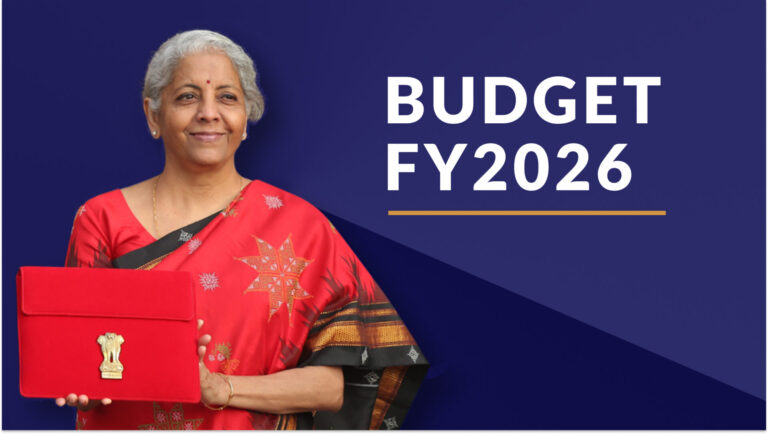
The bigger picture is that the budget has created a conducive environment for growth and fiscal prudence, which is the real essence of a growing economy. With India likely to still grow above the global large economy averages, investors should remain interested!
ARE THE STOCK MARKET BEING TOO MYOPIC ABOUT THE UNION BUDGET?
Stock markets tend to be myopic, more often than not. As Keynes famously said, “Stock markets can be irrational, much longer than you and I can be solvent.” In a sense, the immediate reaction of the Nifty and the Sensex to the sharp hike in the STT rate was one of consternation. The indices fell sharply, but also bounced back sharply as the real picture began to dawn. To an extent, the markets may have been myopic about STT.
That is not to say that the STT increase will not matter. In fact, it will matter a lot. For instance, the increase of STT on futures was from 0.02% to 0.05%, which is 150% higher in absolute terms. Also, the STT on options was increased from 0.10% to 0.15%, an effective spike of 50%. Now, that is surely going to widen your break-even levels in a trade and make trading less profitable. It will also lead to a dwindling of volumes. Let us look at the details.
HOW MUCH DOES THE STT HIKE MATTER?
The STT hike is substantial in absolute terms; no two opinions about that. The STT on futures is up from 0.02% to 0.05%, while the STT on options is up from 0.10% to 0.15%. That is clearly not a small hike. Remember, STT is a cost that has a serious impact for 3 reasons. Firstly, the STT is charged on total transaction value and not on brokerage, so even if you charge zero brokerage, you still have to pay the STT.
Secondly, the STT has to be paid by every trade in the F&O market, irrespective of whether they make a gain or a loss. In capital gains, you only pay tax when you make profits, but STT is not like that. It is a rather ruthless tax. Thirdly, STT paid is not available as a write-off when you file returns as business income or as an individual. That is a major drawback as it reduces the tax effectiveness of the STT payout.
One argument is that the STT has been hiked only on F&O and not on cash market. But that is a flawed argument. For instance, most people use futures and options to either hedge an open position in equity or they do a covered call to reduce the holding cost. Quite often, traders take strategic view on volatility and play with straddles and strangles. Even mutual funds use F&O to take strategic positions and in their arbitrage funds. The impact is huge.
CAPITAL GAINS TAX HAS BEEN A MIXED BAG
It was a bit like adding insult to injury. People were expecting either an STT rate cut or a cut in capital gains tax to reduce the impact on double taxation. Instead, the budget has kept the capital gains tax static, while raising the STT on futures and options. At a net level, people will end up paying more and see their margin of safety in a trade narrowing. There were hopes that either the capital gains exemption limit would be raised, or the capital gains on equity held above 5 years would be fully tax-free. Neither happened.
But there was one positive takeaway on the capital gains front. The Union Budget has rationalized the taxation of buybacks. Currently, buyback proceeds are taxed as dividend income and the cost is treated as a capital loss to be written off against capital gains. This was a huge disconnect and had almost dried up buybacks. The budget has announced that buybacks will still be taxable in the hands of the investor, but as capital gains. That makes it simpler. Promoters will have to pay a higher tax, but it would still be economical.
A UNION BUDGET WITH GROWTH SUPPORTIVE MACROS
It was a budget with growth supportive macros and that is a great boost for the equity markets. Consider these pointers.
Overall, if you ignore the STT myopia, one is inclined to admit that the budget does have a lot subtle push factors for the equity markets.
Related Tags


 IIFL Customer Care Number
(Gold/NCD/NBFC/Insurance/NPS)
1860-267-3000 / 7039-050-000
 IIFL Capital Services Support WhatsApp Number
+91 9892691696
Download The App Now


Follow us on


2026, IIFL Capital Services Ltd. All Rights Reserved

IIFL Capital Services Limited - Stock Broker SEBI Regn. No: INZ000164132 (Member ID - NSE: 10975 BSE: 179 MCX: 55995 NCDEX: 01249), DP SEBI Reg. No. IN-DP-185-2016, IA SEBI Regn. No: INA000000623, Merchant Banker SEBI Regn. No. INM000010940, RA SEBI Regn. No: INH000000248, BSE Enlistment Number (RA): 5016, AMFI-Registered Mutual Fund Distributor & SIF Distributor
ARN NO : 47791 (Date of initial registration – 17/02/2007; Current validity of ARN – 08/02/2027), PFRDA Reg. No. PoP 20092018, IRDAI Corporate Agent (Composite) : CA1099

This Certificate Demonstrates That IIFL As An Organization Has Defined And Put In Place Best-Practice Information Security Processes.