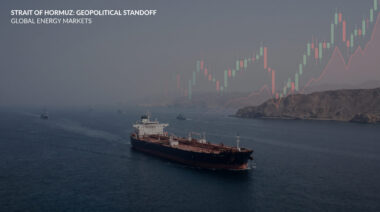
India’s energy sector is witnessing renewed investor interest as geopolitical tensions in West Asia disrupt global crude oil and LPG supply chains. This has triggered a ripple effect across oil marketing and upstream companies, with stocks like Oil and Natural Gas Corporation (ONGC), Bharat Petroleum Corporation Limited (BPCL), and Hindustan Petroleum Corporation Limited (HPCL) reacting positively in the market.
While rising fuel prices often raise concerns for consumers, the stock market is focused on a different story—improving pricing power, better revenue realization, and structural policy reforms in India’s LPG and fuel distribution system.
The current rally in Indian oil and gas stocks is driven by a combination of global supply shocks and domestic policy shifts:
Together, these factors are creating a strong “pricing power” narrative for the energy sector.
Oil and Natural Gas Corporation (ONGC), India’s leading upstream oil producer, is one of the biggest beneficiaries of rising global crude oil prices.
When geopolitical tensions push oil prices upward, ONGC typically sees stronger earnings visibility and improved investor sentiment.
Downstream oil companies like Bharat Petroleum Corporation Limited (BPCL) and Hindustan Petroleum Corporation Limited (HPCL) operate in a more complex pricing environment.
They refine crude oil and distribute petrol, diesel, and LPG—making their margins sensitive to crude volatility and government pricing policies.
Recent LPG cylinder price increases are helping reduce under-recoveries and improve operational cash flow.
Investors are anticipating stronger LPG distribution controls and better subsidy compensation mechanisms.
Digital delivery systems and tighter monitoring are expected to reduce leakage and diversion losses.
One of the biggest developments shaping the sector is expected policy reform in LPG distribution, likely announced around May 2026.
These LPG policy changes are generally being interpreted as net positive for ONGC, BPCL, and HPCL, but for slightly different reasons depending on where each company sits in the value chain.
For Bharat Petroleum Corporation Limited and Hindustan Petroleum Corporation Limited, stronger OTP/DAC delivery systems and mandatory Aadhaar/eKYC checks improve LPG targeting.
Result: cleaner balance sheets and improved working capital cycles for BPCL and HPCL.
Frequent LPG price revisions and tighter booking rules signal a structural shift toward:
For BPCL and HPCL, this means narrowing under-recoveries over time, even if short-term volatility remains.
Digital systems like OTP-based delivery and DAC verification improve:
This directly reduces operational inefficiencies, which improves margins at the EBITDA level for OMCs.
The policy push toward:
supports a more formalized energy distribution ecosystem.
For OMCs, this means:
India’s LPG ecosystem is rapidly becoming more digital:
This shift is helping improve transparency, reduce fraud, and ensure targeted subsidy delivery.
The government is actively promoting a shift from cylinder-based LPG to pipeline natural gas (PNG):
This structural shift is aimed at improving long-term energy efficiency and reducing logistical dependence on cylinder distribution.
The combined effect of geopolitical tensions and domestic reforms is reshaping India’s energy sector:
| Company | Segment | Key Impact | Market Sentiment |
|---|---|---|---|
| ONGC | Upstream oil producer | Gains from higher crude prices | Strong positive |
| BPCL | Refining & marketing | LPG price support, margin pressure | Mild positive |
| HPCL | Refining & marketing | Similar to BPCL | Mild positive |
The rally in India’s energy stocks is being driven less by consumer demand and more by structural expectations of improved pricing power, tighter LPG regulations, and geopolitical supply constraints.
Companies like ONGC, BPCL, and HPCL are benefiting from a combination of:
In essence, the sector is being re-rated on a new narrative: geopolitical risk is translating into stronger pricing power and improved earnings visibility for India’s energy companies.
Disclaimer – The stock/s and indices mentioned in this article is discussed solely for informational and educational purposes. It should not be construed as investment advice or a recommendation to buy or sell any securities. Investors should conduct their own research or consult a financial advisor before making any investment decisions. Investments in securities market are subject to market risks. Read all the related documents carefully before investing.
Related Tags


 IIFL Customer Care Number
(Gold/NCD/NBFC/Insurance/NPS)
1860-267-3000 / 7039-050-000
 IIFL Capital Services Support WhatsApp Number
+91 9892691696
Download The App Now


Follow us on


2026, IIFL Capital Services Ltd. All Rights Reserved

IIFL Capital Services Limited - Stock Broker SEBI Regn. No: INZ000164132 (Member ID - NSE: 10975 BSE: 179 MCX: 55995 NCDEX: 01249), DP SEBI Reg. No. IN-DP-185-2016, IA SEBI Regn. No: INA000000623, Merchant Banker SEBI Regn. No. INM000010940, RA SEBI Regn. No: INH000000248, BSE Enlistment Number (RA): 5016, AMFI-Registered Mutual Fund Distributor & SIF Distributor
ARN NO : 47791 (Date of initial registration – 17/02/2007; Current validity of ARN – 08/02/2027), PFRDA Reg. No. PoP 20092018, IRDAI Corporate Agent (Composite) : CA1099

This Certificate Demonstrates That IIFL As An Organization Has Defined And Put In Place Best-Practice Information Security Processes.