
Table of Content
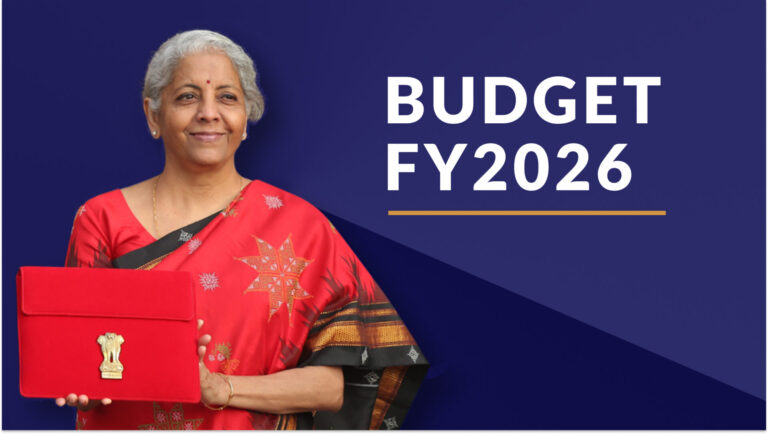
The Union Budget 2026 is one of the most important annual announcements made by the Government of India. It lays out how the country plans to earn and spend money in the coming financial year. From taxes and savings to fuel prices, infrastructure, jobs, and welfare schemes, the Union Budget influences nearly every aspect of daily life whether you’re a salaried professional, business owner, student, retiree, or investor.
Simply put, the Union Budget is the government’s financial roadmap for the year ahead. Understanding it helps citizens make better financial decisions and stay informed about where the economy is headed.
Quick Summary: What This Blog Covers
What Is the Union Budget?
The Union Budget is an annual financial statement presented by the Government of India that estimates its income and expenditure for the upcoming financial year. It outlines how much money the government expects to earn through taxes, dividends, and other sources and how it plans to spend that money on development, welfare, defence, infrastructure, and public services.
The budget is presented every year to ensure transparency, accountability, and proper allocation of public funds. It also serves as a key policy tool, reflecting the government’s priorities and economic vision.
When Is the Union Budget 2026?
The Union Budget 2026 is presented on 1 February 2026, following the standard practice adopted in recent years. The budget speech usually begins at 11:00 AM IST and is delivered in Parliament by the Finance Minister.
Presenting the budget on 1 February allows the government sufficient time to implement new policies and tax changes before the new financial year begins on 1 April.
The Budget Preparation Process
Pre-budget rituals include stakeholder meetings with industry bodies, economists, farmers’ groups, and financial institutions. Traditionally, a “halwa ceremony” marks the final stage of budget preparation, after which the budget documents are printed under strict confidentiality.
Post-budget rituals involve parliamentary discussions, debates, and approval. Once passed, the budget proposals are implemented through notifications, circulars, and policy actions over the financial year.
Purpose of the Union Budget
The primary purpose of the Union Budget is to present a clear picture of the government’s financial position and policy priorities. It outlines expected income, planned expenditure, fiscal management strategies, and reform measures.
Through the budget, the government aims to balance economic growth, social welfare, inflation control, and fiscal discipline while addressing both short-term challenges and long-term development goals.
Why Union Budget 2026 Is Important for Common People
The Union Budget directly and indirectly affects household finances and everyday expenses. Decisions taken in the budget influence taxes, prices of essential goods, interest rates, employment opportunities, and access to public services.
Whether it’s changes in income tax slabs, increased spending on healthcare, or higher allocation for infrastructure, the budget shapes how citizens experience the economy in their daily lives.
Budget announcements can alter income tax rules, deductions, and exemptions, affecting take-home pay. Changes in indirect taxes or subsidies influence prices of fuel, food, and utilities.
Savings instruments such as small-saving schemes, pensions, and insurance may also see changes, impacting long-term financial planning for individuals and families.
The Union Budget plays a critical role in driving economic growth by allocating funds to infrastructure, manufacturing, education, and innovation. Higher capital spending can boost job creation, while welfare schemes support consumption and social stability.
At a macro level, budget decisions influence inflation, borrowing costs, investor confidence, and overall economic momentum.
What Should Investors Do Around the Union Budget 2026?
For everyday investors, the Union Budget should be viewed as a long-term policy signal rather than a short-term trading trigger. While markets may react immediately to announcements, sustained investment decisions should be based on fundamentals, asset allocation, and financial goals.
Staying diversified, avoiding impulsive moves, and focusing on long-term trends such as infrastructure, manufacturing, and consumption can help investors navigate budget-related volatility calmly.
Stay Informed This Budget Season With IIFL Capital
Understanding the Union Budget is easier when insights are clear, timely, and well-explained. With expert analysis, market perspectives, and simplified explanations, IIFL Capital helps investors and market participants stay informed and confident during budget season.
As Union Budget 2026 unfolds, staying aware and well-informed can make all the difference in making thoughtful financial decisions.


 IIFL Customer Care Number
(Gold/NCD/NBFC/Insurance/NPS)
1860-267-3000 / 7039-050-000
 IIFL Capital Services Support WhatsApp Number
+91 9892691696
Download The App Now


Follow us on


2026, IIFL Capital Services Ltd. All Rights Reserved

IIFL Capital Services Limited - Stock Broker SEBI Regn. No: INZ000164132 (Member ID - NSE: 10975 BSE: 179 MCX: 55995 NCDEX: 01249), DP SEBI Reg. No. IN-DP-185-2016, IA SEBI Regn. No: INA000000623, Merchant Banker SEBI Regn. No. INM000010940, RA SEBI Regn. No: INH000000248, BSE Enlistment Number (RA): 5016, AMFI-Registered Mutual Fund Distributor & SIF Distributor
ARN NO : 47791 (Date of initial registration – 17/02/2007; Current validity of ARN – 08/02/2027), PFRDA Reg. No. PoP 20092018, IRDAI Corporate Agent (Composite) : CA1099

This Certificate Demonstrates That IIFL As An Organization Has Defined And Put In Place Best-Practice Information Security Processes.
