Few industries are as vulnerable to global oil prices as aviation.
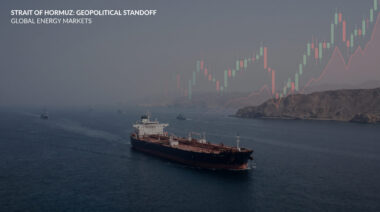
A geopolitical conflict thousands of kilometres away, a disruption in a key shipping route, or a sudden spike in crude oil prices can quickly translate into higher operating costs for airlines and more expensive air tickets for passengers. In recent months, that vulnerability has become increasingly visible as global jet fuel prices surged amid tensions around the Strait of Hormuz, one of the world’s most important energy corridors.
To address this challenge, the Union Cabinet has approved a ₹10,000 crore Price Stabilisation Fund (PSF) for Aviation Turbine Fuel (ATF), while fixing a uniform ATF price of ₹115 per litre for both domestic and international airlines.
The government’s objective is straightforward: reduce fuel-price volatility, provide cost certainty to airlines, and prevent sharp fluctuations in airfares. Whether the scheme can achieve those goals over the long term is a more interesting question.
The immediate trigger for the government’s intervention was the sharp rise in global jet fuel prices. At the end of February, global jet fuel prices were around: $99.4 per barrel. By March 6, prices had climbed to $157.4 per barrel. These continued rising and touched: $181.2 per barrel during the week ending May 1. Although prices later eased to around: $141.6 per barrel by the end of May, the volatility exposed airlines and oil companies to significant financial risk.
The primary reason behind the spike was uncertainty surrounding the Strait of Hormuz, through which a large portion of the world’s oil supplies pass. Any disruption in this region immediately impacts global energy markets and fuel prices. For airlines, which depend heavily on fuel, such sudden increases can significantly raise operating costs.
Fuel is one of the largest expenses for airlines, often accounting for 35-45% of total operating costs. As global fuel prices rose, airlines were still paying around: ₹105 per litre for domestic ATF. This was only about 8.6% higher than March levels, despite international fuel prices increasing much more sharply.
The burden of the difference fell largely on oil marketing companies (OMCs), which were reportedly absorbing losses of around: ₹30 per litre on ATF sales.
This arrangement was becoming increasingly difficult to sustain. If prices continued rising, airlines would face pressure to increase ticket prices while OMCs would continue suffering financial losses. The government therefore decided to introduce a mechanism that would smooth out these fluctuations.
The new system revolves around a fixed ATF price of ₹115 per litre
Under the scheme, airlines will continue purchasing fuel at this price regardless of market fluctuations. When market prices rise above ₹115 per litre, the government will use the ₹10,000 crore fund to compensate OMCs for the difference.
If ATF costs ₹135 per litre in the market, airlines will still pay ₹115. The remaining ₹20 will be paid from the stabilisation fund.
If market prices rise further to ₹150 per litre, airlines continue paying ₹115 while the government covers the additional ₹35.
This shields airlines from sudden cost shocks and provides greater predictability in operating expenses.
The system also works in reverse.
If market prices fall below ₹115 per litre, airlines will continue paying the fixed rate. The excess amount collected by OMCs is transferred back into the stabilisation fund, helping replenish the corpus over time.
In effect, the government has created a financial buffer that absorbs volatility during periods of rising prices and rebuilds itself when prices decline.
The most obvious benefit is stability. Airlines will be able to forecast fuel expenses more accurately, making it easier to plan routes, pricing strategies, and future investments. The scheme could also reduce sudden airfare spikes, which often occur when airlines pass higher fuel costs on to passengers.
Another advantage is liquidity management. Airlines will not have to arrange large amounts of additional cash every time global fuel prices surge, improving financial flexibility. For oil marketing companies, the scheme reduces the need to absorb losses whenever international fuel prices rise rapidly.
While the scheme offers protection, it is not without challenges. The biggest concern is the size of the fund itself. A corpus of ₹10,000 crore may appear substantial, but prolonged periods of elevated fuel prices could deplete the fund quickly. If global energy prices remain high for an extended period, the government may eventually need to provide additional support.
Another concern is that airlines may not immediately benefit from falling fuel prices. Under the scheme, they continue paying ₹115 per litre even if market prices drop below that level. In effect, airlines receive protection from price spikes but give up some of the gains when prices decline.
There is also the question of long-term sustainability. The success of the mechanism depends on fuel prices moving in cycles. If prices remain elevated for too long, replenishing the fund may become difficult.
The ₹10,000 crore Price Stabilisation Fund is ultimately an attempt to bring predictability to an industry that operates in a highly unpredictable environment.
By fixing ATF prices at ₹115 per litre, the government is effectively transferring part of the fuel-price risk away from airlines and into a dedicated stabilisation mechanism. If global fuel prices moderate over time, the fund could function as intended, smoothing out volatility and reducing pressure on both airlines and consumers.
However, if geopolitical tensions persist and energy prices remain elevated, the true test of the scheme will be whether the corpus is large enough to absorb prolonged market stress.
For now, the policy offers Indian airlines something they rarely enjoy when it comes to fuel costs certainty. And in aviation, certainty can be just as valuable as lower prices.
Inputs taken from https://www.pib.gov.in
Related Tags


 IIFL Customer Care Number
(Gold/NCD/NBFC/Insurance/NPS)
1860-267-3000 / 7039-050-000
 IIFL Capital Services Support WhatsApp Number
+91 9892691696
Download The App Now


Follow us on


2026, IIFL Capital Services Ltd. All Rights Reserved

IIFL Capital Services Limited - Stock Broker SEBI Regn. No: INZ000164132 (Member ID - NSE: 10975 BSE: 179 MCX: 55995 NCDEX: 01249), DP SEBI Reg. No. IN-DP-185-2016, IA SEBI Regn. No: INA000000623, Merchant Banker SEBI Regn. No. INM000010940, RA SEBI Regn. No: INH000000248, BSE Enlistment Number (RA): 5016, AMFI-Registered Mutual Fund Distributor & SIF Distributor
ARN NO : 47791 (Date of initial registration – 17/02/2007; Current validity of ARN – 08/02/2027), PFRDA Reg. No. PoP 20092018, IRDAI Corporate Agent (Composite) : CA1099

This Certificate Demonstrates That IIFL As An Organization Has Defined And Put In Place Best-Practice Information Security Processes.