22 Jul 2026 , 06:36 PM
Market Briefs
The Shanghai Composite settled essentially unchanged, with the blue-chip CSI 300 falling 0.5% as the oil price surge reintroduced inflation concerns that weighed on rate-sensitive names. The session was cautious overall as investors awaited Alphabet’s earnings results and the Politburo meeting signal, with the CSRC’s market support measures from the prior day providing a floor but not a catalyst for significant gains.
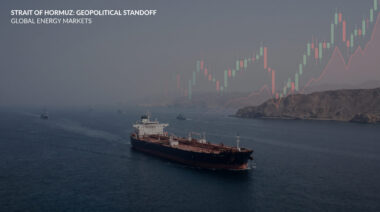
Hong Kong’s Hang Seng fell 1.1%, weighed down by the oil-driven risk-off mood as Brent crude rose above $93 a barrel after two tankers carrying Saudi crude to Asia reversed course in the Red Sea following threats of attack from Yemen’s Houthi rebels. Technology and consumer names bore the brunt of the selling, with the Hang Seng Tech Index underperforming the broader index.
Tokyo ended marginally lower, with the Nikkei 225 slipping 0.18% after the index had climbed nearly 2% earlier in the session before surrendering its gains as oil prices surged to six-week highs and Alphabet earnings caution crept in through the afternoon. Japan’s June export data provided an early boost — exports rose 19.3% year-on-year, beating the forecast of 18.6% and marking a tenth consecutive month of growth, driven by AI-related semiconductor equipment demand and a weak yen that inflated the yen value of dollar-denominated shipments. But the session ultimately ended slightly red as the oil surge proved the stronger force.
Seoul’s KOSPI closed 0.74% higher, a result that masked a dramatically more volatile session — the index surged more than 5% at the open as Samsung Electronics and SK Hynix continued their recovery, before trimming gains sharply as crude prices extended their rally to six-week highs following Houthi threats to widen the Middle East conflict. Bloomberg noted that the unwinding of leveraged bets that had driven the KOSPI nearly 30% below its peak appeared to be approaching an end, with the recovery increasingly looking like a structural repositioning rather than a dead-cat bounce.
Mumbai declined 0.79% as the oil surge renewed pressure on the rupee and the current account deficit narrative, overriding the positive global tech mood that had supported Indian equities the previous day. Futures tied to India’s Nifty 50 fell 0.8% by midday, confirmed by the closing figure, with energy import cost anxiety the primary driver of domestic selling pressure through the session.
Impact on India: The expansion of maritime risk to the Red Sea — on top of the already-disrupted Strait of Hormuz — represents the worst-case scenario for India’s oil import logistics. India routes significant crude volumes through the Red Sea as well as the Hormuz corridor, and simultaneous threats across both waterways mean there are effectively no low-risk maritime routes for Indian energy imports from the Middle East and the Persian Gulf. Each additional maritime chokepoint that comes under threat increases shipping insurance premiums, routing costs, and effective import prices for India beyond what the Brent headline number alone suggests. The Nifty’s 0.79% decline on Wednesday is a direct reflection of how immediately and severely the Indian equity market responds to any escalation in oil-related risk — and with Brent now approaching $95 in after-hours trading, the macro pressure on India’s current account, rupee, and inflation management is intensifying again.
Impact on India: Japan’s tenth consecutive month of export growth — driven by semiconductor equipment — is a useful leading indicator for the health of the global chip supply chain. When Japanese semiconductor equipment makers are shipping at a growing pace, it confirms that chip manufacturers are investing in new production capacity — a signal that AI-driven demand for chips is not only real but is pulling through the entire capital equipment supply chain. For India, the relevance is twofold: Japanese semiconductor equipment companies are among the potential partners for India’s semiconductor mission as the country seeks to build domestic chip manufacturing capacity, and the sustained export momentum reinforces the broader AI spending confidence that underpins Indian IT services revenue growth. The BOJ’s signalled alertness to upside inflation risks is also worth monitoring: faster BOJ rate hikes than currently priced would further strengthen the yen carry trade unwind narrative, which can pressure capital flows into emerging markets including India.
Impact on India: The KOSPI’s volatile but positive close on a day when oil surged is a cautiously encouraging signal for the broader Asian emerging market environment. When Korea can hold gains despite oil pressure, it suggests that AI sector confidence is providing a meaningful counterweight to geopolitical risk — a dynamic that is positive for the technology-oriented portion of Indian equity markets as well. India’s IT sector, which has been somewhat insulated from the worst of the chip volatility given that it is a services rather than hardware play, continues to benefit from a global technology investment environment that remains fundamentally intact despite the recent correction. The narrowing of the KOSPI’s intraday swing from +5% to +0.74% is also a reminder that oil price developments remain the single most powerful intraday market force in the current environment — and that India, as the world’s third-largest oil importer, sits directly in the path of every oil-driven market move.
Impact on India: The BOJ’s signal that it may hike rates faster than expected has direct consequences for India through the carry trade channel. The yen carry trade — in which investors borrow cheaply in yen and invest in higher-yielding currencies and assets globally — has been a structural source of capital inflows into emerging markets including India for years. As the BOJ raises rates and the yen strengthens, carry trade positions become less profitable and are gradually unwound, reducing the pool of yen-funded capital available for Indian equity and bond markets. A faster-than-expected BOJ rate path also tends to strengthen the yen sharply, which can trigger rapid carry trade liquidation — a dynamic that India experienced painfully in August 2024 and that remains a latent risk given the scale of carry positions still outstanding. For Indian policymakers and corporate treasurers managing foreign currency exposure, the BOJ’s hawkish signal on July 22 is a risk factor that warrants close monitoring through the second half of 2026.
Impact on India: Alphabet’s earnings represent one of the clearest near-term catalysts for Indian IT sector sentiment. Google Cloud’s growth trajectory directly influences the revenue prospects of Indian IT firms that have built significant practices around Google Cloud implementation, AI integration, and managed services. Infosys, Wipro, and HCL Technologies have all deepened their Google Cloud partnerships in recent years, and any acceleration in Google Cloud enterprise adoption translates into more contract opportunities for their AI and cloud migration teams. Beyond the Google Cloud revenue line, Alphabet’s overall capex guidance on AI infrastructure — which covers data centres, custom chips, and networking — will signal whether the hyperscaler spending boom that has been the primary demand driver for the chip sector, and indirectly for Indian IT AI services, continues at full pace or begins to moderate. The result, due after the US close on Wednesday, will shape Asian market direction when Tokyo, Seoul, Hong Kong, and Mumbai open on Thursday.
Related Tags


 IIFL Customer Care Number
(Gold/NCD/NBFC/Insurance/NPS)
1860-267-3000 / 7039-050-000
 IIFL Capital Services Support WhatsApp Number
+91 9892691696
Download The App Now


Follow us on


2026, IIFL Capital Services Ltd. All Rights Reserved

IIFL Capital Services Limited - Stock Broker SEBI Regn. No: INZ000164132 (Member ID - NSE: 10975 BSE: 179 MCX: 55995 NCDEX: 01249), DP SEBI Reg. No. IN-DP-185-2016, IA SEBI Regn. No: INA000000623, Merchant Banker SEBI Regn. No. INM000010940, RA SEBI Regn. No: INH000000248, BSE Enlistment Number (RA): 5016, AMFI-Registered Mutual Fund Distributor & SIF Distributor
ARN NO : 47791 (Date of initial registration – 17/02/2007; Current validity of ARN – 08/02/2027), PFRDA Reg. No. PoP 20092018, IRDAI Corporate Agent (Composite) : CA1099

This Certificate Demonstrates That IIFL As An Organization Has Defined And Put In Place Best-Practice Information Security Processes.