China | Shanghai Composite | 4,041.23 | -2.41 | -0.06%
Shanghai traded in a cautious range as Asian markets moved broadly higher on Monday, with oil prices edging lower after OPEC+ agreed to raise output targets, while Iran’s week of mass mourning for slain Supreme Leader Ayatollah Ali Khamenei injected an overlay of geopolitical uncertainty that capped sentiment.
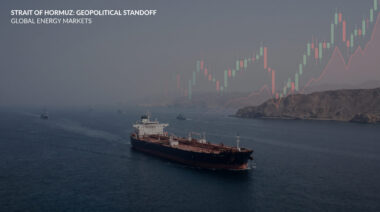
The Shanghai Composite barely moved, reflecting investor indecision ahead of this week’s NATO summit in Ankara where the Strait of Hormuz’s security status is expected to be discussed, and with US-Iran talks effectively paused until after Khamenei’s burial on Thursday.
Japan | Nikkei 225 69,737.47 | -6.38 | -0.01%
Japan’s Nikkei 225 bucked the broader Asian uptrend, declining as investors weighed geopolitical uncertainty from the Khamenei funeral proceedings and the temporary pause in US-Iran negotiations against a generally constructive oil price backdrop.
Semiconductor and AI-linked names, which had led the prior week’s recovery, faced fresh profit-taking pressure as investors awaited clearer signals from the NATO Ankara summit on the future of the Strait of Hormuz security framework.
India | Nifty 50 24,430.35 | +150.97 | +0.66%
Indian equity benchmarks opened higher on Monday tracking gains across Asian peers and a steady Wall Street close on Thursday, with oil prices slipping after OPEC+ increased output targets further, providing a supportive macro backdrop.
Strength was visible in pharmaceuticals, autos, IT, and select financial stocks, with CIPLA, Tech Mahindra, Dr Reddy’s, Bajaj Auto, and Sun Pharma among the session’s standout gainers, while Asian Paints, Titan, and Nestle India weighed on the index from the other side.
HDFC Bank shares were in spotlight after reporting a 15.4% increase in gross advances to ₹30.61 lakh crore as of June 2026, with period-end deposits growing 14.7% year-on-year, a robust Q1 FY27 business update that supported sentiment in the banking sector.
South Korea | KOSPI 8,051.33 | -37.01 | -0.46%
Seoul slipped modestly, with the KOSPI giving back a fraction of last week’s sharp recovery as semiconductor names faced renewed profit-taking following the prior week’s extreme two-way volatility. The South Korean won dipped to near a two-week low as uncertainty around the ongoing US-Iran peace deal clouded investor sentiment, even as equities elsewhere in Asia managed gains.
With US-Iran negotiations effectively on pause during Khamenei’s funeral week and the NATO Ankara summit expected to set the diplomatic tone for the next phase of talks, Korean chip investors remained in a wait-and-see posture rather than adding to positions.
Hong Kong | Hang Seng Index (HSI) 23,616.33 | +269.20 | +1.14%
Hong Kong’s Hang Seng gained 0.90% in early trade, outperforming most Asian peers, as oil prices fell on the OPEC+ output increase and the Khamenei funeral proceedings maintained the ceasefire without fresh military escalation, a combination that reduced the geopolitical risk premium embedded in Hong Kong’s energy and commodities-sensitive components.
Technology platform stocks including Kuaishou recovered ground, with Kuaishou rising after the company announced a capital injection of nearly $2.8 billion into its AI subsidiary Kling AI, with backing from Tencent, targeting a $15 billion valuation for the AI unit.
Impact on India: The Khamenei funeral procession’s market significance for India lies in what it temporarily suspends rather than what it triggers. With US-Iran negotiations paused for the mourning week, the timeline for a durable peace agreement has shifted by at least five to seven days, pushing any meaningful diplomatic breakthrough into the second week of July at the earliest. For the Reserve Bank of India, whose August policy meeting will be shaped significantly by whether oil stabilises below $75 or reverses toward $90, the funeral week’s diplomatic pause adds uncertainty to an already complex rate-setting environment. The anti-US chanting at the funeral procession is also a reminder that domestic political pressure within Iran’s new leadership may constrain how far negotiators can move toward the US position in Doha, a risk that Indian energy planners are monitoring as they assess the durability of the current $70-72 Brent price level.
Impact on India: OPEC+’s fifth consecutive output hike is the most sustained and deliberate oil supply response to a geopolitical shock in the cartel’s recent history, and its cumulative impact on India’s macro picture has been transformative. India’s monthly crude import bill at $72 Brent is approximately 40% lower than it was at the $120 peak, translating into savings of tens of thousands of crore rupees per month in foreign exchange expenditure. For the RBI’s rate-cutting calculus, lower oil directly reduces imported inflation, improves the current account balance, and strengthens the case for monetary easing without triggering rupee weakness. The question for Indian policymakers is no longer whether oil will fall, it has, but whether the $68-72 range is durable enough to anchor inflation expectations through the August policy cycle.
Impact on India: HDFC Bank’s Q1 FY27 business update is the opening salvo of India’s earnings season, and its strong advance and deposit growth figures set a high bar for sector peers. For Indian equity markets, HDFC Bank’s performance matters beyond its own stock price, as India’s largest private sector lender by market capitalisation and a significant Nifty 50 constituent, its earnings trajectory shapes the index’s overall earnings per share growth outlook. A banking sector that continues to grow advances at 15%+ while maintaining deposit momentum is a banking sector that will generate strong fee income, treasury gains from a falling rate environment, and contained credit costs, a combination that is historically very supportive of Nifty Bank index performance. The upcoming full Q1 FY27 earnings season, beginning in earnest from mid-July, will test whether the business update’s headline numbers translate into strong bottom-line performance.
Impact on India: India is not a NATO member, but the Ankara summit’s deliberations on Strait of Hormuz security directly determine the physical infrastructure conditions through which approximately 40% of India’s oil imports transit. Any NATO decision to establish a sustained naval presence in the Strait would have profound implications for India’s energy security calculus. It would make the Strait’s reopening more durable and less dependent on the fragile Iran ceasefire, but it would also deepen Western control over a waterway that India has historically sought to keep outside great-power competition. India’s Ministry of External Affairs will be tracking the Ankara summit’s Hormuz deliberations as closely as any NATO member state.
Impact on India: Kuaishou’s $2.8 billion Kling AI investment is the latest data point in a pattern that Indian AI policymakers need to track carefully. Chinese technology platforms are deploying capital into generative AI video and creative tools at a scale and speed that Indian AI startups cannot match with domestic funding alone. Kling AI’s video generation capabilities directly compete with products being developed by Indian AI startups in the creative and entertainment technology space. For India’s AI policy framework, currently being shaped by MeitY’s National AI Mission, the Chinese AI capital deployment wave creates urgency around establishing a well-funded domestic AI ecosystem before Chinese AI products achieve distribution dominance in India’s consumer and creator economy segments.
Related Tags


 IIFL Customer Care Number
(Gold/NCD/NBFC/Insurance/NPS)
1860-267-3000 / 7039-050-000
 IIFL Capital Services Support WhatsApp Number
+91 9892691696
Download The App Now


Follow us on


2026, IIFL Capital Services Ltd. All Rights Reserved

IIFL Capital Services Limited - Stock Broker SEBI Regn. No: INZ000164132 (Member ID - NSE: 10975 BSE: 179 MCX: 55995 NCDEX: 01249), DP SEBI Reg. No. IN-DP-185-2016, IA SEBI Regn. No: INA000000623, Merchant Banker SEBI Regn. No. INM000010940, RA SEBI Regn. No: INH000000248, BSE Enlistment Number (RA): 5016, AMFI-Registered Mutual Fund Distributor & SIF Distributor
ARN NO : 47791 (Date of initial registration – 17/02/2007; Current validity of ARN – 08/02/2027), PFRDA Reg. No. PoP 20092018, IRDAI Corporate Agent (Composite) : CA1099

This Certificate Demonstrates That IIFL As An Organization Has Defined And Put In Place Best-Practice Information Security Processes.