Market Briefs
China Index – Shanghai Composite | 4,073.90 | +1.16%
Mainland Chinese equities rose solidly, with the Shanghai Composite gaining 46 points as easing energy costs and domestic buying support helped lift industrial and technology names.
Japanese Index – Nikkei 225 | 69,107.03 | +0.15%
Tokyo edged slightly higher as markets attempted to stabilise after last week’s technology-driven volatility. Gains remained limited as investors stayed cautious amid renewed US–Iran tensions and persistent inflation uncertainty.
South Korean Index – KOSPI | 8,394.65 | -0.20%
Seoul slipped slightly as continued weakness in AI-linked semiconductor stocks weighed on sentiment, though losses remained modest compared to last week’s sharp swings.
Hong Kong Index – Hang Seng | 23,026.69 | +1.57%
Hong Kong rebounded strongly, adding 354 points as bargain buying returned after recent multi-month lows. Lower oil prices and tentative hopes of renewed US–Iran dialogue supported risk appetite.
Indian Index – Nifty 50 | 23,946.25 | -0.46%
Indian benchmark index ended lower as the Nifty fell 109 points, dragged by profit-taking in banking and financials. IT stocks remained broadly flat, while defensive sectors offered limited support.
Key News and Impact on India
-
Iran and US Trade Attacks Over the Weekend — Ceasefire Under Its Most Severe Strain Yet
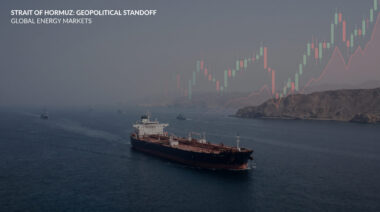
- A drone strike on the Singapore-flagged cargo vessel Ever Lovely in the Strait of Hormuz on June 25 — attributed by Washington to Iran — set off a chain of retaliatory attacks over the following 72 hours. The US struck five Iranian sites, Iran launched ballistic missiles and drones at US military bases in Kuwait and Bahrain, and by Sunday the Revolutionary Guard had threatened a complete halt to all ongoing peace negotiations.
- Iran’s Islamic Revolutionary Guard said it had targeted the US Ali Al Salem Air Base in Kuwait and the US Fifth Fleet headquarters at Port Salman in Bahrain. Bahrain condemned the attacks as a violation of its sovereignty, Kuwait described them as a flagrant breach of international law, and the UAE, Saudi Arabia, Qatar, and Egypt all issued condemnations — with the Gulf Cooperation Council presenting a unified front against Tehran’s strikes on its neighbours.
- By Sunday evening, however, a White House official confirmed that all Iranian drones and missiles had been shot down, intercepted, or failed to reach their targets, with no US casualties or damage to American sites reported. A US official also indicated that technical talks between Washington and Tehran were expected to continue, partially defusing the risk of a complete breakdown in negotiations.
- Iran’s foreign minister reiterated on Sunday that Tehran must govern the Strait of Hormuz, and that any attempt to establish alternative transit arrangements without Iranian oversight would delay rather than accelerate any reopening of the waterway.
Impact on India: The weekend’s exchange of strikes is the most serious test yet of the fragile ceasefire framework signed earlier in June. For India, the direct concern is the Strait of Hormuz — every additional round of military action raises the probability that the partial Oman-adjacent shipping route recently expanded by the US Navy will face further disruption, prolonging India’s energy import challenge. The confirmation that no US military personnel were harmed and that talks will continue was a meaningful relief for markets on Monday morning — but the fundamental instability of the ceasefire is now visible, and India’s energy security planners cannot afford to assume resolution is imminent.
-
US PCE Hits 3-Year High — Fed Rate Hike Now Seen as 50-50 for September
- The US Bureau of Economic Analysis reported on Thursday that headline PCE inflation rose to 4.1% annually in May — its highest reading since April 2023 and up from 3.8% in April. Core PCE, which strips out food and energy and is the Fed’s most closely watched inflation measure, rose to 3.4% annually — matching expectations and marking its highest level since October 2023.
- On a monthly basis, overall PCE rose 0.4% and core PCE rose 0.3%. Personal income and personal spending both came in above expectations, rising 0.7% for the month — signalling that American consumers are continuing to spend despite elevated price pressures, a combination that gives the Federal Reserve little room to ease.
- Markets are now pricing approximately a 50% probability of a Federal Reserve rate hike by September. Deutsche Bank expects two rate hikes this year — in September and December — bringing the federal funds rate to 4.1%, while Morgan Stanley’s chief economic strategist described the data as a clear reminder that inflation remains well above target.
- One source of potential relief: Brent crude fell to approximately $73.40 a barrel on Thursday, down more than 35% from its peak near $114, as Hormuz partial reopening hopes and the prospect of Iranian oil re-entering the market eased supply fears. Analysts noted that if oil prices remain at current levels, June’s PCE reading should show a meaningful decline in the energy component — which could take pressure off the Fed ahead of the September meeting.
Impact on India: A headline PCE reading of 4.1% — the highest in three years — locks in the narrative of a Federal Reserve that cannot cut rates and is increasingly likely to hike. For India, this has three direct consequences. First, the rupee faces continued depreciation pressure as the dollar remains strong on rate hike expectations. Second, FII flows into Indian debt and equity remain constrained as long as US yields offer elevated risk-free returns. Third, the RBI faces a constrained policy environment — if it cuts rates to support growth, it risks widening the interest rate differential with the US and accelerating rupee weakness. The one mitigating factor is the oil price trajectory: with Brent near $73, India’s import bill is easing significantly from the May peak, which improves the current account outlook even if the monetary policy environment remains difficult.
-
SoftBank Continues to Slide — OpenAI IPO Delay Costs Japan’s Most Valuable Company 20% in Two Sessions
- SoftBank Group fell a further 5.9% on Monday, extending Friday’s 12.5% collapse and wiping out more than 20% of its market value over two sessions. The cumulative selloff has reversed the company’s recent run to overtake Toyota as Japan’s most valuable listed company, with the gap between the two now significantly narrowed.
- The continued decline reflected lingering investor concern that the reported delay of OpenAI’s IPO to 2027 pushes back the timeline for SoftBank to monetise its $65 billion stake — a position that had been the central pillar of the company’s re-rating from a struggling conglomerate to an AI investment powerhouse over the past twelve months.
- SoftBank’s situation is further complicated by the ongoing volatility in SpaceX’s share price — which has fallen from a post-IPO high of $225.64 to around $152 as of Monday — given that SoftBank’s Vision Fund also holds a position in SpaceX, and the broader mega-AI IPO market has clearly turned more cautious following SpaceX’s turbulent public debut.
- The Nikkei’s near-flat performance on Monday, despite the broader Asian rebound, reflected the ongoing drag from SoftBank and chip-related names — underscoring how dependent Japan’s equity market has become on a handful of AI-linked positions.
Impact on India: SoftBank’s sustained decline matters for India beyond the headline numbers. The Vision Fund is one of the most active growth-stage investors in Indian technology, with significant positions across Indian consumer tech, fintech, and logistics companies. A sustained compression in SoftBank’s market value reduces the group’s financial flexibility for new Indian investments and follow-on rounds in its existing portfolio. More structurally, the cooling of mega-AI IPO sentiment — which both the OpenAI delay and SpaceX’s post-listing decline reflect — signals that the private market valuations of SoftBank-backed Indian startups may face pressure at their next funding rounds, as public market comparables provide a lower anchor for valuation.
-
Hang Seng Rebounds 1.57% — Bargain Hunting Returns After 12% Decline from Peak
- Hong Kong’s Hang Seng gained 354 points, or 1.57%, to close at 23,026, snapping its recent losing streak as investors took advantage of the index’s sharp decline from its highs above 25,500. Technology names led the recovery, with SMIC rising 8.9%, Tencent gaining 3.4%, and Kingboard Laminates adding 7.2%.
- The rebound was supported by lower oil prices — Brent crude’s fall below $75 was a meaningful positive for Hong Kong-listed consumer and industrial companies that have been squeezed by elevated energy costs throughout the Iran conflict. Southbound buying flows from mainland Chinese investors — a reliable source of support for Hong Kong equities during periods of weakness — were also cited by traders as a factor in Monday’s recovery.
- Despite the day’s gain, the Hang Seng remains more than 10% below its recent peak and continues to trade below the neckline of the head-and-shoulders pattern identified by technical analysts in mid-June — a formation that historically signals further weakness unless a macro catalyst reverses the trend decisively.
- Lingyi iTech, the Apple supplier whose HK$8.3 billion IPO debuted last week despite the broader market weakness, continued to attract attention as a signal that selective appetite for AI-supply-chain-linked Hong Kong listings remains intact even in a turbulent market environment.
Impact on India: Hong Kong’s rebound is a positive signal for Asian equity risk appetite broadly, and suggests that the most acute phase of last week’s AI selloff may have passed. For Indian equity markets, a stabilising Hong Kong often precedes a recovery in FII flows into the broader Asian emerging market complex — and India, with its relatively stronger earnings backdrop and improving macro fundamentals from lower crude prices, is well positioned to attract capital if global funds resume their Asia allocation. The question is whether the Hang Seng rebound is a dead-cat bounce or the beginning of a genuine recovery — and the answer depends almost entirely on whether US-Iran talks resume in earnest.
-
Shanghai Rebounds 1.16% — China’s Equity Market Finds Support as Energy Costs Ease
- Mainland Chinese equities staged their strongest single-session gain in several weeks on Monday, with the Shanghai Composite rising 46 points and the Shenzhen Component adding 0.19% as domestic buying support and easing oil prices provided twin tailwinds. Industrial and materials names led the advance, reflecting the direct benefit to Chinese manufacturers of crude prices returning to near pre-conflict levels.
- The rebound followed a sharp two-session selloff that had taken the Shanghai Composite below 4,030 — the lower end of the 4,040-to-4,180 trading range that technical analysts had identified as the medium-term support zone. Monday’s close above 4,073 represents a partial reclaim of that range, though a decisive break above 4,160 would be needed to signal renewed bullish momentum.
- Chinese authorities were reported to be monitoring the domestic equity market closely, with state-backed funds described by traders as having stepped in selectively during last week’s selloff to provide price support in key index heavyweights — a pattern consistent with the government’s broader market stabilisation approach during periods of elevated volatility.
- Consumer confidence data due later in the week from China was being watched as a gauge of whether lower energy costs were beginning to translate into improved domestic spending sentiment, which would provide a more fundamental basis for the equity recovery than pure bargain-hunting flows.
Impact on India: China’s equity rebound on Monday has a dual relevance for India. First, a recovering Chinese market reduces the probability of a large-scale Asian-wide risk selloff that pulls Indian equities down regardless of domestic fundamentals. Second, falling energy costs in China — the world’s largest crude importer — signal reduced competition for the same oil supply that India imports, which is a marginal positive for India’s import pricing. However, if China’s recovery is driven by domestic stimulus rather than genuine demand revival, the competitive dynamics for Indian exporters in global markets remain challenging, as a stimulus-driven Chinese manufacturing boom would maintain competitive pressure on Indian goods in Asian export markets.




 IIFL Customer Care Number
  IIFL Capital Services Support WhatsApp Number