iifl-logo

Invest wise with Expert advice

By continuing, I accept the T&C and agree to receive communication on Whatsapp

Karvy Customer: For activating your account click here.
Download App

Asian Markets Wrap | Nikkei at All-Time High, KOSPI Crosses 9,000, India Steady Above 24K

18 Jun 2026 , 07:40 PM

Market Briefs

China | Shanghai Composite | 4,090.48 | -0.43%

China’s Shanghai Composite edged 0.4% lower, diverging from the broader regional peace-deal euphoria as China’s crackdown on mainland investments in Hong Kong pressured capital flows and domestic investor sentiment remained cautious.

Japan | Nikkei 225 | 71,053.27 | +1.65%

Japan’s Nikkei surpassed 70,000 for the first time this week and continued gaining on Thursday, driven by chip component makers and SoftBank Group, which rose 3% after logging deep losses in recent sessions. The Nikkei’s crossing of 71,000 on a closing basis represents a new milestone for the index.

South Korea | KOSPI | 9,063.84 | +2.25%

South Korea’s KOSPI gained 2.3% to close at 9,063.84, setting a fresh record high, with Samsung Electronics rising 4.6% and SK Hynix advancing 6.5% to lead the semiconductor surge. The index has now roughly tripled over the past year — one of the most dramatic bull runs in any major market’s recent history.

Hong Kong | Hang Seng Index | 23,924.82 | -1.59%

Hong Kong’s Hang Seng slid to its weakest level since July 2025, with Alibaba, Tencent, Baidu, and Xiaomi all falling between 1% and 3% as investors rotated away from Chinese internet names toward AI hardware and chipmaking stocks in Japan, South Korea, and Taiwan.

India | Nifty 50 | 24,168.00 | +0.34%

India’s Nifty added 0.34%, consolidating above the 24,000 milestone crossed on Wednesday as the confirmed Iran deal signing provided a steady tailwind. Falling oil prices spurred increased optimism over an economic recovery in India, with Nifty futures trading 0.6% higher ahead of the session open.


Key News and Impact on India

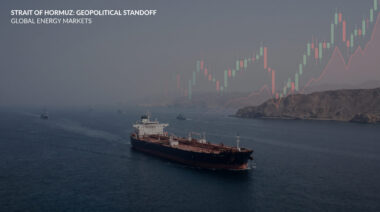
  1. US-Iran Peace Deal Signed — Hormuz Reopening Begins, 60-Day Nuclear Negotiation Window Opens
  • US and Iranian officials signed the interim peace agreement electronically on Wednesday evening — two days ahead of the previously expected Friday ceremony in Switzerland — with the deal going into effect on Thursday and potentially accelerating the reopening of the Strait of Hormuz to commercial shipping
  • The deal outlined a 60-day window for negotiations on more protracted issues, including Tehran’s nuclear programme, with the Hormuz reopening and Iranian oil sanctions relief the immediate deliverables and the nuclear framework the medium-term negotiation agenda
  • Gold rose as much as 1.7% to $4,328 an ounce on the signing news, erasing the prior session’s sharp decline, as markets recalibrated the safe-haven landscape with the geopolitical risk premium in oil falling but uncertainty about the 60-day nuclear negotiation outcome creating a residual demand for hedges
  • The signing came despite the Fed’s hawkish dot plot released just hours earlier — the market’s ability to absorb both a rate hike signal and a peace deal signing in the same 24-hour window illustrates how the two forces are currently operating on separate tracks in investor decision-making
  • US stock futures surged after the signing: Nasdaq 100 futures jumped 1.5%, S&P 500 futures rose 0.8%, and Dow futures advanced 0.5% — a clear reversal of Wednesday’s sell-off driven by Warsh’s press conference

Impact on India: The formal signing of the US-Iran peace deal is the single most consequential macro event for India in 2026. With the deal now in effect and Hormuz reopening proceedings underway, India’s crude import cost trajectory shifts definitively lower. For the Finance Ministry, this represents a potential saving of $12-18 billion annually in crude import costs relative to the peak conflict levels — enough to narrow the current account deficit meaningfully, reduce fiscal pressure from fuel subsidy obligations, and provide the RBI with the inflation headroom it needs to cut rates. The 60-day nuclear negotiation window introduces some residual uncertainty, but the immediate Hormuz reopening and sanctions relief are the near-term variables that matter most for India’s energy economics.


  1. KOSPI Hits 9,000 for the First Time — Samsung and SK Hynix at Record Highs
  • South Korea’s KOSPI crossed the 9,000 level for the first time in its history, closing at 9,063.84 — with Samsung Electronics rising 4.6% and SK Hynix advancing 6.5% to drive the advance
  • The KOSPI has roughly tripled over the past year, making it one of the strongest-performing major indices in the world over that period — a run built on the AI semiconductor boom, the Iran conflict resolution, and the structural upgrade of Korean corporate governance
  • SK Hynix’s 6.5% single-day gain followed the company’s announcement that it had shipped samples of its latest advanced memory chip to major customers — a product milestone that directly validates its position as the dominant supplier of high-bandwidth memory for Nvidia’s AI accelerators
  • Samsung’s 4.6% advance similarly reflected growing confidence that the company’s recent delays in HBM qualification — which had been a point of investor concern through early 2026 — were being resolved, with production scaling now back on track
  • The KOSPI’s record close at 9,063 completes one of the most dramatic recovery arcs in major market history: from the June 8 circuit-breaker low of 7,484 to a record high of 9,063 in just eight trading sessions — a 21% recovery

Impact on India: The KOSPI’s crossing of 9,000 is a milestone that reinforces the global AI hardware demand cycle’s structural strength. For Indian markets, the KOSPI’s sustained record-breaking run validates the investment thesis that has been driving FII re-engagement with Asia broadly — and India, as a beneficiary of improved regional risk appetite, stands to continue attracting FPI inflows as the post-Iran-deal normalisation proceeds. For Indian semiconductor ambitions, SK Hynix’s record and its HBM milestone announcement are reminders of the technology and capital investment gap India still needs to close — the India Semiconductor Mission’s long-term success will be measured against precisely the kind of leading-edge memory capability that SK Hynix is demonstrating today.


  1. Nikkei Crosses 71,000 — Japan at All-Time Highs as AI Chip Rally and Iran Peace Deal Boost Sentiment
  • Japan’s Nikkei 225 closed at 71,053.27 — its highest level ever — marking the third consecutive session in which the index has set a new all-time record as the Iran peace deal and AI semiconductor strength provide a compounding positive backdrop
  • Chip component makers Murata Manufacturing and Aibiden were the top performers on Thursday, while SoftBank Group rose 3% after logging deep losses in recent sessions — the conglomerate’s recovery contributing materially to the Nikkei’s advance given its significant index weighting
  • The Topix also advanced, with its broader sectoral participation beyond AI names confirming that Japan’s bull market has genuine width rather than being concentrated in a handful of technology conglomerates
  • The yen’s stability following the BoJ’s rate hike to 1% — without the dramatic carry trade unwinding that some models had predicted — has been a crucial enabler of the Nikkei’s continued advance, as yen strengthening would compress the export earnings that underpin Japanese corporate profitability
  • Japan’s equity market has now delivered approximately 32% year-to-date gains through June 18 — a performance that places it among the best-performing major markets globally and reflects the confluence of AI investment, Iran deal relief, and a structural corporate governance improvement cycle

Impact on India: Japan’s sustained record-breaking at 71,000 creates a virtuous global risk appetite cycle that benefits India through multiple channels. Improved Japanese corporate confidence supports Japanese FDI into India — Japan is already one of India’s largest bilateral investment partners. A buoyant Nikkei also reflects healthy global technology investment, which sustains the AI infrastructure spending cycle that generates downstream IT services demand for Indian firms. The yen’s stability post-BoJ hike is particularly important: without a disruptive carry unwind, the FPI flow normalisation that India needs to recoup June’s outflows can proceed without the currency volatility headwind that a sharp yen strengthening would create.


  1. Hong Kong Slides to July 2025 Lows — China Capital Crackdown and Rotation Hit Hard
  • Hong Kong’s Hang Seng index fell to its weakest level since July 2025, with Alibaba, Tencent, Baidu, and Xiaomi all declining between 1% and 3% as investor rotation away from Chinese internet names toward AI hardware and chipmaking stocks in Japan, South Korea, and Taiwan intensified
  • China’s crackdown on mainland investments in Hong Kong added a structural headwind — the policy signals that wealthy mainland Chinese investors will face tighter restrictions on deploying capital into Hong Kong-listed stocks, reducing the natural buying support that mainland flows have historically provided to the Hang Seng
  • Stocks with wealth management and brokerage exposure were among the worst hit — AIA and Prudential both nursed deep losses — as the mainland capital flow restriction directly reduces the addressable market for Hong Kong’s financial services sector
  • The contrast between Hong Kong’s slide to a ten-month low and South Korea’s surge to an all-time high on the same day captures the defining investment rotation of 2026: away from Chinese platform and consumer internet names toward AI hardware and semiconductor companies
  • China’s own stimulus measures, while supporting mainland Shanghai to some extent, have not been sufficient to override the structural rotation and policy headwinds weighing on Hong Kong-listed technology names

Impact on India: Hong Kong’s divergence from Seoul and Tokyo on Thursday is directly relevant for Indian capital markets. The rotation out of Chinese internet names into AI hardware is a global institutional trend, and India — with its strong software services, fintech, and consumer internet sector — is partly competing with Chinese platform companies for global EM fund allocation. As long as this rotation persists, India’s differentiated positioning — domestically-driven growth, lower geopolitical risk, no equivalent capital flow restriction concerns — strengthens its relative case for FII allocation within Asia. The mainland capital flow crackdown on Hong Kong also raises broader questions about China’s capital account openness, which contrasts favourably with India’s improving investor accessibility framework.


  1. India Consolidates Above 24,000 — RBI Rate Cut Expectations Build as Deal Takes Effect
  • India’s Nifty 50 advanced 0.34% to 24,168, its fifth consecutive positive session, maintaining its position above the 24,000 milestone as the Iran deal’s formal signing provided the fundamental confirmation the market had been anticipating
  • Nifty Bank continued to lead sectoral performance as the market’s expectation of an RBI rate cut at the next policy meeting crystallised — the combination of oil below $80, a stronger rupee, and now a signed peace deal creates the most compelling case for monetary easing India has had since rates were last cut in December 2025
  • The rupee’s trajectory remained a key watch point — the dollar’s 1% surge following Warsh’s press conference on Wednesday had partially reversed the rupee’s Iran-deal-driven gains, but the currency held near 94-95 against the dollar, suggesting that the peace deal’s fundamental support for India’s external account is providing a floor
  • IT stocks remained the notable laggard within the Nifty, as the sector continues to navigate the AI disruption narrative and its implications for traditional headcount-driven revenue models — a structural adjustment that the Iran deal’s resolution does not address
  • Nifty 50 futures had signalled a 0.6% open ahead of the session as falling oil prices spurred optimism over India’s economic recovery trajectory — the futures market’s read proving directionally accurate with the index’s measured advance on the day

Impact on India: Thursday’s session confirmed that India’s equity market has successfully absorbed the twin shocks of June — the Iran conflict escalation and the Fed’s hawkish pivot — without a structural breakdown in either price level or investor confidence. The Nifty’s hold above 24,000 through five consecutive sessions of geopolitical and monetary policy turbulence is the clearest evidence yet of the domestic institutional demand floor that has been built over three years of systematic retail and SIP-driven investment flows. The RBI’s next policy communication — now the single most anticipated domestic event for Indian markets — will either validate or challenge the market’s rate-cut expectations. If the RBI judges that the peace deal’s inflation relief is durable enough to outweigh the Fed’s hawkish constraint, a rate cut would be the most powerful positive catalyst available for Indian equities in the near term.

Related Tags

  • #AsianEquities
  • #AsianMarketsWrap
  • #AsianStocks
  • #AsiaPacificMarkets
  • #BusinessNews
  • #EconomicOutlook
  • #FinanceNews
Download App

BLOGS AND PERSONAL FINANCE

Read More
Knowledge Center
Logo

Logo IIFL Customer Care Number
(Gold/NCD/NBFC/Insurance/NPS)
1860-267-3000 / 7039-050-000

Logo IIFL Capital Services Support WhatsApp Number
+91 9892691696

Download The App Now

appapp
Loading...

Follow us on

facebooktwitterrssyoutubeinstagramlinkedintelegram

2026, IIFL Capital Services Ltd. All Rights Reserved

ATTENTION INVESTORS

RISK DISCLOSURE ON DERIVATIVES

Copyright © IIFL Capital Services Limited (Formerly known as IIFL Securities Ltd). All rights Reserved.

IIFL Capital Services Limited - Stock Broker SEBI Regn. No: INZ000164132 (Member ID - NSE: 10975 BSE: 179 MCX: 55995 NCDEX: 01249), DP SEBI Reg. No. IN-DP-185-2016, IA SEBI Regn. No: INA000000623, Merchant Banker SEBI Regn. No. INM000010940, RA SEBI Regn. No: INH000000248, BSE Enlistment Number (RA): 5016, AMFI-Registered Mutual Fund Distributor & SIF Distributor
ARN NO : 47791 (Date of initial registration – 17/02/2007; Current validity of ARN – 08/02/2027), PFRDA Reg. No. PoP 20092018, IRDAI Corporate Agent (Composite) : CA1099

ISO certification icon
We are ISO/IEC 27001:2022 Certified.

This Certificate Demonstrates That IIFL As An Organization Has Defined And Put In Place Best-Practice Information Security Processes.