iifl-logo

Invest wise with Expert advice

By continuing, I accept the T&C and agree to receive communication on Whatsapp

Karvy Customer: For activating your account click here.
Download App

Asian Markets Wrap | SoftBank Overtakes Toyota as Japan's Most Valuable Company | Nikkei surges to all-time high

3 Jun 2026 , 07:21 PM

Market Briefs

China | Shanghai Composite Index 4,083.97 | +0.22%

Mainland Chinese equities edged modestly higher, with the Shanghai Composite gaining 7.56 points as investors continued to rotate into select technology and industrial names.

Hong Kong | Hang Seng Index 25,633.22 | -1.56%

Hong Kong reversed the previous session’s gains, pulling back as investor sentiment turned cautious on renewed uncertainty surrounding US-Iran peace negotiations and their potential impact on global risk appetite. Property stocks also came under pressure amid reports that tighter mainland Chinese restrictions on overseas capital transfers could weigh on demand from wealthy Chinese buyers.

Japan | Nikkei 225 68,401.91 | +2.50%

Tokyo surged to a fresh all-time high on Wednesday, with the Nikkei 225 topping 68,000 for the first time as investors tracked Wall Street’s record closes and doubled down on AI-linked semiconductor names. Technology shares were the primary engine, with buying broadly concentrated in companies tied to the global chip supply chain.

South Korea | KOSPI 8,801.49 | +0.15%

South Korea’s benchmark index edged up 13.11 points, or 0.15%, to close at 8,801.49, consolidating near recent highs as chip-linked optimism offset caution over geopolitical developments.


Key News and Impact on India

  1. Nikkei Tops 68,000 for the First Time — AI and Semiconductor Rally Drives Tokyo to Record
  • The Nikkei 225 crossed 68,000 for the first time during Wednesday’s session, extending a remarkable run higher as technology shares linked to the AI boom continued to attract institutional buying.
  • Tokyo Electron, a key supplier of chip-manufacturing equipment, gained 10.1% in the session, while Advantest — which makes testing equipment for advanced semiconductors — climbed 4.6%, with both companies benefiting directly from surging global demand for AI chips.
  • The dollar briefly pushed past 160 Japanese yen before easing back, with the yen’s continued weakness providing an additional tailwind for Japan’s export-heavy corporate sector.
  • Despite ongoing uncertainty over US-Iran negotiations and the continued closure of the Strait of Hormuz, markets appeared to look past geopolitical risk, choosing instead to focus on the momentum in technology investment tied to Computex 2026 proceedings in Taipei.

Impact on India: Japan’s record rally now up over 29% year-to-date is driven by the same global AI investment cycle that is generating outsourcing and technology services demand for Indian IT firms. Strong momentum in Japanese semiconductor equipment names reflects robust capital expenditure at foundries and chipmakers globally, which feeds downstream demand for Indian IT companies managing chip design, testing, and manufacturing support services. A sustained strong yen depreciation, however, makes Japanese exports more competitive in Asian markets where Indian manufacturers also compete.


  1. US-Iran Tensions Escalate — Hormuz Mines and Commercial Ship Attacks Reported
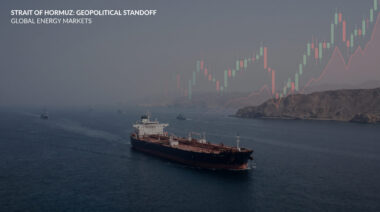
  • US Secretary of State Marco Rubio told the Senate Foreign Relations Committee that Iran had mined large segments of the Strait of Hormuz and was firing on commercial ships,  representing his first appearance before Congress since the Iran war began on February 28.
  • A White House official told CNBC that the Pentagon had destroyed numerous mines and over 40 minelaying vessels in the waterway, but the Strait remains closed to normal shipping traffic.
  • The Strait of Hormuz accounts for roughly 20% of the world’s oil supply, making its continued closure one of the most significant ongoing constraints on global energy markets.
  • Oil prices rose over a dollar a barrel on the fresh escalation reports, adding to the pressure on energy-importing economies across Asia.

Impact on India: The confirmation that Iran is actively mining and targeting commercial ships in the Strait of Hormuz is a serious escalation that directly threatens India’s energy security. India imports roughly 85% of its crude oil needs, with a large share transiting this chokepoint. Active mining of the waterway  as opposed to a diplomatic standoff raises insurance costs for all tankers transiting the region, pushes up crude prices, and deepens India’s import bill. The longer the closure persists, the greater the pressure on India’s current account deficit, rupee stability, and the RBI’s ability to manage inflation through rate policy alone.


  1. SoftBank Overtakes Toyota as Japan’s Most Valuable Company
  • SoftBank Group surged over 14% in Monday’s session carrying momentum through the week after its market capitalisation exceeded 48 trillion yen, overtaking Toyota Motor and ending Toyota’s more than 20-year reign as Japan’s most valuable listed company.
  • The surge was fuelled by Arm Holdings’ more than threefold increase in share price this year, alongside SoftBank’s announcement of a 75-billion-euro investment to build an AI computing cluster in France — a commitment that positioned the group at the centre of Europe’s AI infrastructure build-out.
  • SoftBank’s extraordinary ascent has been one of the defining stories of the current Japanese bull market, with the company emerging as one of the most powerful expressions of AI investment enthusiasm in global equity markets under founder Masayoshi Son.
  • Toyota fell approximately 4.49% on the day of the reshuffle, as the market rotated from traditional industrials into AI-linked technology conglomerates.

Impact on India: SoftBank’s Vision Fund remains one of the most active technology investors in India, with large positions across Indian consumer tech, fintech, and logistics companies. A sustained rise in SoftBank’s valuation and the continued strength of Arm Holdings typically increases the group’s capacity for fresh investments and follow-on rounds in its existing Indian portfolio. The company’s pivot toward AI infrastructure also signals where global capital is flowing — a useful guide for Indian tech startups and IT firms seeking to position their AI-linked offerings for international investor interest.


  1. Hang Seng Falls on Iran Uncertainty and Property Sector Concerns
  • Hong Kong’s Hang Seng gave back a portion of recent gains, with technology counters that had led Tuesday’s rally — including Tencent and Meituan — pulling back as geopolitical caution returned to the market.
  • Traders were also monitoring Hong Kong’s property sector after reports that tighter mainland Chinese restrictions on overseas capital transfers could reduce demand from wealthy mainland buyers, potentially slowing the segment’s recovery momentum.
  • The Hang Seng Tech Index declined 2.44%, underperforming the broader market, as investors locked in profits from the previous session’s technology-led advance.
  • Despite the day’s decline, Hong Kong’s market remained broadly supported by AI-related optimism and ongoing expectations of policy stimulus from Beijing, with the index well above the levels seen during the Iran-driven selloffs in March and April.

Impact on India: A Hong Kong pullback driven by property-sector headwinds in China is a reminder that Chinese domestic demand — which competes with Indian exports in several manufacturing and consumer categories — remains fragile. The restriction on overseas capital transfers from mainland China could signal tighter capital controls ahead, which would affect the flow of Chinese institutional money into emerging markets broadly. For Indian capital markets, however, Hong Kong’s weakness on property concerns is less of a direct risk and more of a signal that China’s recovery remains uneven.


  1. Shanghai and KOSPI Hold Steady – Regional Markets Show Resilience Despite Oil Risk
  • Despite the geopolitical noise from the Middle East, mainland Chinese equities showed resilience, with the Shenzhen Index advancing 1.64% while the Shanghai Composite edged up 0.19% to 4,082.66 — reflecting continued support from domestic technology and consumer names.
  • South Korea’s KOSPI closed up 0.15% at 8,801.49, with Australia’s ASX 200 also adding 0.59%, and Southeast Asian markets, including Singapore, Malaysia, and Thailand posting gains across the board.
  • The broad resilience of Asian markets despite fresh Hormuz escalation news underlines how much the AI investment narrative is cushioning regional equities against geopolitical risk, at least for now.

Impact on India: The resilience of Asian peers despite elevated oil risk is a double-edged signal for India. On one hand, it reflects global investor confidence in the AI-driven growth narrative, which India participates in through its technology services sector. On the other hand, the same confidence that keeps equity markets buoyant also keeps oil prices elevated — with Brent crude rising on the latest Hormuz news — making India’s energy import bill heavier with each passing week. India’s markets, unlike Japan or South Korea, remain more directly sensitive to crude prices given the country’s energy import dependence.


Related Tags

  • #AIInvestment
  • #AIStocks
  • #ArmHoldings
  • #CrudeOilPrices
  • #EmergingMarkets
  • #EnergyMarkets
  • #GlobalInvesting
Download App

BLOGS AND PERSONAL FINANCE

Read More
Knowledge Center
Logo

Logo IIFL Customer Care Number
(Gold/NCD/NBFC/Insurance/NPS)
1860-267-3000 / 7039-050-000

Logo IIFL Capital Services Support WhatsApp Number
+91 9892691696

Download The App Now

appapp
Loading...

Follow us on

facebooktwitterrssyoutubeinstagramlinkedintelegram

2026, IIFL Capital Services Ltd. All Rights Reserved

ATTENTION INVESTORS

RISK DISCLOSURE ON DERIVATIVES

Copyright © IIFL Capital Services Limited (Formerly known as IIFL Securities Ltd). All rights Reserved.

IIFL Capital Services Limited - Stock Broker SEBI Regn. No: INZ000164132 (Member ID - NSE: 10975 BSE: 179 MCX: 55995 NCDEX: 01249), DP SEBI Reg. No. IN-DP-185-2016, PMS SEBI Regn. No: INP000002213, IA SEBI Regn. No: INA000000623, Merchant Banker SEBI Regn. No. INM000010940, RA SEBI Regn. No: INH000000248, BSE Enlistment Number (RA): 5016, AMFI-Registered Mutual Fund Distributor & SIF Distributor
ARN NO : 47791 (Date of initial registration – 17/02/2007; Current validity of ARN – 08/02/2027), PFRDA Reg. No. PoP 20092018, IRDAI Corporate Agent (Composite) : CA1099

ISO certification icon
We are ISO/IEC 27001:2022 Certified.

This Certificate Demonstrates That IIFL As An Organization Has Defined And Put In Place Best-Practice Information Security Processes.