20 Jul 2026 , 12:55 PM
Global energy markets witnessed a sharp rally on Monday, July 20, as crude oil prices jumped nearly 4% amid escalating tensions between the United States and Iran. Investors moved quickly to price in the risk of potential disruptions to Middle East oil supplies, pushing Brent crude futures above the $91 per barrel mark during early trading.
The latest surge highlights how geopolitical developments continue to influence commodity markets, with traders closely monitoring military actions, diplomatic signals, and the security of critical energy transportation routes.
Brent crude futures climbed to around $91.41 per barrel, compared with the previous close of $88.10 per barrel, before easing slightly. Later in the session, Brent traded near $90.40 per barrel, still maintaining a gain of approximately 2.6%.
The rally came after renewed concerns over the possibility of further escalation in the US-Iran conflict and its potential impact on global crude supply.
Over recent trading sessions, oil prices have shown strong momentum:
Meanwhile, West Texas Intermediate (WTI) crude also advanced, trading around $83.73 per barrel after closing at $81.78 per barrel. The benchmark reached an intraday high of $84.59 per barrel, marking a session gain of roughly 2.3%.
The latest oil rally was triggered by investor reaction to the ninth consecutive US military strike targeting Iranian positions. The strikes reportedly focused on key military infrastructure, including:
The United States stated that the operations were aimed at reducing Iran’s ability to threaten commercial shipping and maritime security.
However, markets remain concerned that continued military escalation could create broader risks for energy supply chains, particularly across the Middle East.
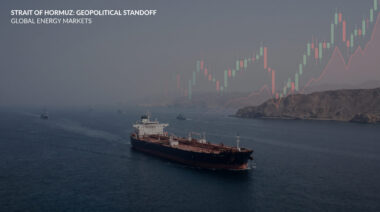
A major factor driving the oil price rally is uncertainty surrounding the Strait of Hormuz, one of the world’s most important oil shipping routes.
A significant portion of global crude exports passes through this narrow waterway, making any potential disruption a major concern for energy markets.
A prolonged disruption could lead to:
Iran reportedly claimed restrictions involving the route, while US authorities maintained that oil shipments continue to move through the passage.
For traders, even the possibility of disruption creates a geopolitical risk premium that pushes prices higher.
Higher crude oil prices create mixed consequences for global markets.
Oil price gains could benefit:
Higher crude prices generally improve revenue expectations for companies involved in oil extraction and production.
However, sustained oil price increases could create challenges for consumers and businesses.
Expensive crude oil may increase:
Central banks and investors will closely watch whether higher energy prices create renewed inflationary pressure.
Alongside oil, gold prices also moved higher as investors sought protection from geopolitical uncertainty.
Comex gold traded near $4,030 per ounce, gaining around 3% during the period.
The rise in gold demand was supported by:
Gold traditionally attracts investors during periods of geopolitical stress because it is viewed as a store of value during uncertain market conditions.
The US dollar weakened slightly during trading, with the Bloomberg US Dollar Spot Index trading near 100.719, down around 0.05%.
A weaker dollar can provide support to commodities such as crude oil and gold because these assets become relatively cheaper for investors holding other currencies.
Market participants are expected to closely monitor several key developments:
Any signs of negotiations or de-escalation could reduce geopolitical risk premiums.
Additional strikes or retaliatory actions could push energy prices higher.
The stability of this major oil route remains a critical factor for global supply outlook.
Investors will assess whether producers outside the region can compensate for any potential disruptions.
Progress toward diplomatic solutions could ease pressure on energy markets.
The current crude oil rally is being driven primarily by geopolitical risk rather than a sudden change in global demand and supply fundamentals.
Crude oil prices have climbed sharply as investors respond to rising US-Iran tensions and concerns over Middle East supply disruptions. While current market movements reflect uncertainty rather than immediate supply shortages, continued instability could keep energy prices elevated.
At the same time, gold’s rise highlights growing investor demand for safe-haven assets during periods of geopolitical stress.
The direction of oil and commodity markets in the coming weeks will largely depend on military developments, diplomatic efforts, and the security of key global energy routes.
Disclaimer – The stock/s and indices mentioned in this article is discussed solely for informational and educational purposes. It should not be construed as investment advice or a recommendation to buy or sell any securities. Investors should conduct their own research or consult a financial advisor before making any investment decisions. Investments in securities market are subject to market risks. Read all the related documents carefully before investing.
Related Tags


 IIFL Customer Care Number
(Gold/NCD/NBFC/Insurance/NPS)
1860-267-3000 / 7039-050-000
 IIFL Capital Services Support WhatsApp Number
+91 9892691696
Download The App Now


Follow us on


2026, IIFL Capital Services Ltd. All Rights Reserved

IIFL Capital Services Limited - Stock Broker SEBI Regn. No: INZ000164132 (Member ID - NSE: 10975 BSE: 179 MCX: 55995 NCDEX: 01249), DP SEBI Reg. No. IN-DP-185-2016, IA SEBI Regn. No: INA000000623, Merchant Banker SEBI Regn. No. INM000010940, RA SEBI Regn. No: INH000000248, BSE Enlistment Number (RA): 5016, AMFI-Registered Mutual Fund Distributor & SIF Distributor
ARN NO : 47791 (Date of initial registration – 17/02/2007; Current validity of ARN – 08/02/2027), PFRDA Reg. No. PoP 20092018, IRDAI Corporate Agent (Composite) : CA1099

This Certificate Demonstrates That IIFL As An Organization Has Defined And Put In Place Best-Practice Information Security Processes.