24 Jul 2026 , 08:13 PM
Global financial markets came under renewed pressure as a sharp rise in oil prices, escalating geopolitical tensions, and growing inflation concerns unsettled investors worldwide. Crude oil prices have surged nearly 40% this month, with Brent crude crossing the $100 per barrel mark as fears of supply disruptions intensified.
The latest energy shock has increased concerns that higher fuel costs could slow global economic growth while making it more difficult for central banks to control inflation.
Brent crude prices climbed to around $100.3 per barrel after rising to a two-month high near $102. The increase was driven by growing concerns over disruptions in major oil transportation routes, including the Red Sea and the Strait of Hormuz.
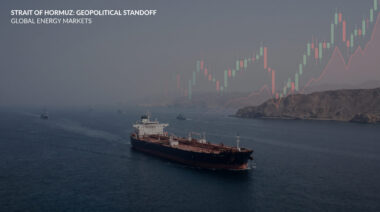
The Strait of Hormuz is one of the world’s most important energy corridors, with a significant portion of global oil shipments passing through the region. Any prolonged disruption could create shortages, push energy prices higher, and increase costs across industries.
Recent attacks on Saudi oil tankers in the Red Sea, combined with rising tensions involving Iran and continued military actions by the United States, have heightened uncertainty in global energy markets.
The sharp increase in oil prices has revived fears of a new wave of inflation. Higher crude prices typically lead to increased costs for transportation, manufacturing, and consumer goods.
Economists warn that sustained energy inflation could pressure households and businesses while forcing central banks to reconsider their monetary policy strategies.
The latest developments have raised concerns that inflation could remain elevated for longer than expected, delaying potential interest rate cuts and increasing the possibility of further monetary tightening.
The oil price surge triggered widespread selling across Asian equity markets as investors moved away from riskier assets.
Major Asian indices recorded significant declines:
Investor sentiment weakened as markets assessed the potential impact of higher energy prices, geopolitical uncertainty, and tighter financial conditions.
European markets were also expected to remain cautious as investors monitored developments in the Middle East and their impact on inflation and economic growth.
The energy shock pushed government bond yields higher as investors increased expectations of tighter monetary policy.
Markets are now pricing in a greater possibility of a US Federal Reserve interest rate increase, with expectations of further rate action strengthening. Higher inflation risks could make policymakers more cautious about easing monetary conditions.
The European Central Bank has also maintained interest rates for now, but investors are increasingly anticipating possible additional tightening in the coming months.
Higher interest rates generally increase borrowing costs for companies and consumers, potentially slowing economic activity.
Adding to market uncertainty, the US administration announced new tariffs affecting imports from 60 trading partners.
The move raised concerns that higher trade barriers could increase production costs, disrupt supply chains, and add further inflationary pressure to the global economy.
Investors are closely watching whether rising energy costs and trade restrictions could combine to create a more challenging environment for businesses and consumers.
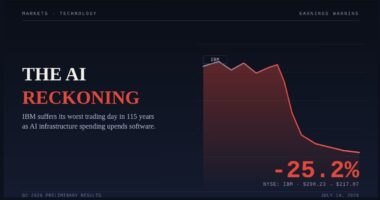
Technology stocks also contributed to weaker market sentiment after major companies reported significant spending on artificial intelligence infrastructure.
Tesla shares dropped around 14%, while Alphabet declined nearly 7%, as investors questioned whether large-scale AI investments would generate sufficient returns in the near term.
The sell-off highlights growing concerns that high technology spending could impact profitability, even as companies continue to invest heavily in artificial intelligence capabilities.
Rising US Treasury yields supported the US dollar as investors sought stronger returns from dollar-denominated assets.
Meanwhile, gold prices faced pressure despite heightened geopolitical uncertainty. A stronger dollar and higher bond yields often reduce demand for non-yielding assets such as gold.
Market analysts warn that continued conflict in the Gulf region could keep oil prices elevated and create additional challenges for global economic growth.
If major shipping routes remain disrupted and energy prices stay high, businesses and consumers may face increasing cost pressures. Central banks could also find it more difficult to balance inflation control with economic growth support.
Investors will continue monitoring developments in the Middle East, oil market trends, inflation data, and central bank decisions for signs of how the global economy may respond to the latest energy shock.
The combination of rising oil prices, geopolitical instability, inflation concerns, and tighter monetary policy expectations has created a challenging environment for global markets. Until tensions ease and energy supply risks decline, investors are likely to remain cautious as they assess the impact on growth, inflation, and financial markets worldwide.
Related Tags


 IIFL Customer Care Number
(Gold/NCD/NBFC/Insurance/NPS)
1860-267-3000 / 7039-050-000
 IIFL Capital Services Support WhatsApp Number
+91 9892691696
Download The App Now


Follow us on


2026, IIFL Capital Services Ltd. All Rights Reserved

IIFL Capital Services Limited - Stock Broker SEBI Regn. No: INZ000164132 (Member ID - NSE: 10975 BSE: 179 MCX: 55995 NCDEX: 01249), DP SEBI Reg. No. IN-DP-185-2016, IA SEBI Regn. No: INA000000623, Merchant Banker SEBI Regn. No. INM000010940, RA SEBI Regn. No: INH000000248, BSE Enlistment Number (RA): 5016, AMFI-Registered Mutual Fund Distributor & SIF Distributor
ARN NO : 47791 (Date of initial registration – 17/02/2007; Current validity of ARN – 08/02/2027), PFRDA Reg. No. PoP 20092018, IRDAI Corporate Agent (Composite) : CA1099

This Certificate Demonstrates That IIFL As An Organization Has Defined And Put In Place Best-Practice Information Security Processes.