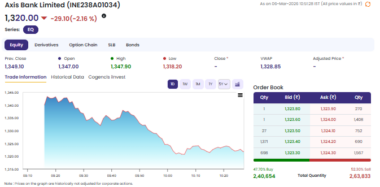

Shares of several banking and life insurance companies came under pressure today after the Reserve Bank of India proposed tighter rules on how insurance products are sold along with bank loans.
The move targets a common practice in the financial sector bundling insurance policies with loans, particularly credit protection insurance.
While the proposal is aimed at improving transparency for customers, investors are worried that it could slow down a profitable segment of the insurance business and reduce fee income for banks.
Here is a simple breakdown of what is happening and why the market reacted negatively.
RBI Wants Clear Customer Consent for Insurance Sales
Banks often sell insurance products alongside loans such as home loans, personal loans, or car loans. This model is known as bancassurance, where banks act as distribution partners for insurance companies.
Under the proposed rules, banks will no longer be able to automatically attach insurance policies to loans. Customers will have to explicitly agree to buy the insurance product.
Think of ordering food online.
Earlier, the app automatically added a beverage to your cart when you ordered a meal unless you removed it.
But after the new rule – the beverage will not appear in your cart unless you choose it yourself.
However small the insurance amount may have contributed to the loans, but separating this will have an impact on the profits of the companies.
The Key Product at Risk: Credit Protection Insurance
The biggest impact could be on credit protection insurance, a policy that pays off a borrower’s loan if something happens to them, such as death or disability.
These policies are frequently sold when someone takes:
-
Home loans
-
Personal loans
-
Retail credit products
If fewer borrowers opt for these policies, insurance companies could see a slowdown in this segment.
Why Even a Small Drop Matters
Credit protection policies account for only a small portion of total insurance sales.
However, they are high-margin products, which means they generate strong profits for insurers.
Let’s simplify this – imagine a mobile store that sells:
-
Smartphones (large sales volume but moderate profit)
-
Accessories like earphones and chargers (smaller volume but very high profit)
If sales from accessories decline even slightly, the store’s profit falls more than its total sales.
Insurance companies face a similar situation with credit protection policies.
Understanding the Profit Metric: VNB
Insurance companies track a metric called Value of New Business (VNB), which represents the expected future profit from policies sold during a period.
Even though credit protection products make up a small portion of overall sales, they contribute more significantly to VNB because they are more profitable.
If these policies are sold less frequently, profit growth could slow, even if total premium growth remains stable.
Which Insurance Companies Are More Exposed
Not all life insurers are affected equally.
Some companies rely more heavily on bank-driven sales and loan-linked policies.
Companies with relatively higher exposure include:
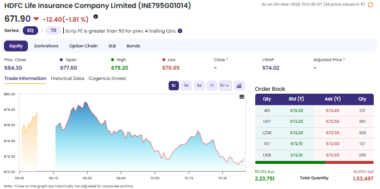

Companies with comparatively lower exposure include:
As a result, investors expect the first group to see slightly higher pressure on profit margins if loan-linked insurance sales slow.
Banks May Also Feel Some Pressure
Banks earn commissions when they sell insurance policies through their branches.
This commission forms part of their non-interest income.
If fewer insurance policies are sold alongside loans, banks could see some reduction in fee income.
Large banks like: HDFC Bank, ICICI Bank, Axis Bank have diversified income streams, so the impact may be manageable. However, smaller banks that rely more heavily on insurance cross-selling could feel greater pressure.