
17 Jun 2026 , 06:41 PM
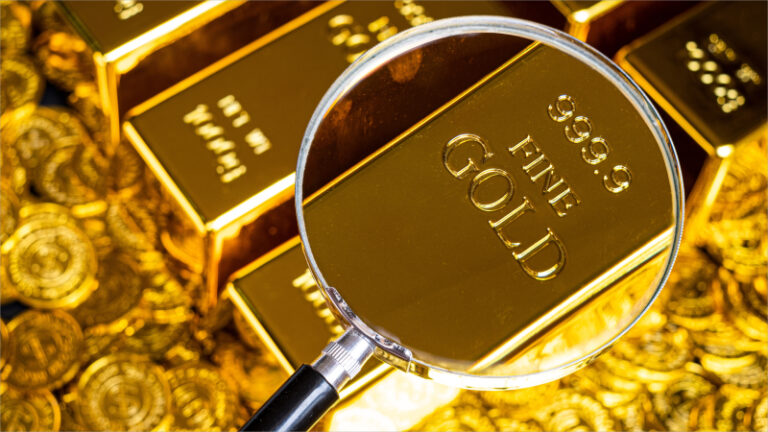
Gold and silver have rallied hard over the past two trading sessions, even as global markets brace for a long-awaited de-escalation in the Gulf. Spot gold has climbed back above $4,300 an ounce, up more than 2% for the week and not far from a one-week high, after spiking as much as 3.6% intraday on Monday. Silver has done even better, vaulting back above $70 an ounce, a gain of roughly 3% over the same two sessions. On India’s Multi Commodity Exchange, gold futures jumped 1.46% to around ₹1.53 lakh per 10 grams, while silver is holding firmly above ₹2.52 lakh a kilogram.
That is the part that should not be happening. The United States and Iran are widely expected to formally sign an interim peace agreement in Switzerland on Friday, ending a 109-day conflict that disrupted oil flows through the Strait of Hormuz since late February. Brent crude has already tumbled more than 4%, sliding below $80 a barrel to its lowest level since early March. A de-escalating war is supposed to drain safe-haven demand, not feed it; investors are supposed to sell their hedges and rotate back into risk assets. Instead, gold and silver are rallying straight into the peace deal, not away from it.


A weaker US dollar: As Treasury yields have eased over the past two sessions, the dollar has lost some of its shine, and a softer dollar mechanically makes gold cheaper for buyers transacting in euros, yen or rupees, pulling in fresh demand.
Fed rate expectations turning friendlier: The Fed wraps up a two-day policy meeting today, its first under new Chair Kevin Warsh. Markets price a 97% probability of a hold at 3.50–3.75%, but the real focus is the updated dot plot. As oil retreats, traders are unwinding bets on a December rate hike, and every basis point shaved off future tightening lowers the opportunity cost of holding non-yielding gold.
Inflation that refuses to fully cool: May’s consumer price data surprised to the upside at 4.2% year-on-year, with energy costs tied to the conflict responsible for more than 60% of that monthly gain. Even as the war ends, that print is now baked into the data, keeping gold’s inflation-hedge appeal intact.
Economic and policy uncertainty: Warsh’s confirmation was the most partisan in Fed history, and the final Powell-era meeting in April produced an unusually split 8–4 vote. With US federal debt above $37 trillion generating over $1 trillion in annual interest costs, investors are treating gold as insurance against problems that have little to do with Tehran.
ETF demand, strong but uneven: Global gold investment demand recorded $18.7 billion of January inflows. Asian funds have stayed consistent buyers even as North America logged its largest-ever monthly ETF outflow in March, and some Western money rotated into red-hot technology ETFs in May.
Steady central bank buying: Central banks added a net 244 tonnes of gold to their reserves in the first quarter of 2026 alone, continuing a multi-year push to diversify away from dollar holdings a trend that has nothing to do with the news cycle in the Gulf.
Investor positioning after a brutal correction: Gold is still roughly 23% below its all-time high of near $5,590 struck on January 28, its deepest pullback of the cycle, including a single-month decline of over 10% in March, the worst since 2013. That drawdown, against a wall of bullish year-end forecasts, primed investors to treat this week’s news as a buying opportunity rather than an exit signal.
Bond yields easing from their highs: The 10-year Treasury yield, which had briefly spiked to 4.55% on hawkish Fed fears, slid to around 4.44% this week, its lowest in nearly three weeks, as the peace deal reduced the odds the Fed would need to fight energy-driven inflation with higher rates.
In a normal cycle, a peace deal is bad news for gold. War-risk premiums unwind, hedges get sold, and capital rotates back into equities and other assets that benefit from calmer geopolitics. That is the textbook, and it is why so many traders were positioned for gold to fall this week, not rise.
What the textbook misses is that this war was never really a fear trade for gold to begin with it was an inflation trade that went the wrong way. When the Strait of Hormuz partially closed in February, oil prices spiked, energy costs flowed straight into consumer inflation, and the Fed signalled it might need to hold rates higher for longer, or even hike, rather than cut. Higher rate expectations meant a stronger dollar and higher real yields, both bearish for gold and silver. That is precisely why silver often seen as the more “fearful” of the two metals fell about 23% between late February and early June, even as the fighting continued.
Peace now reverses that mechanism, just not in the direction most people expect. Oil collapsing more than 4% removes the inflationary impulse the war created, which makes it easier for the Fed to eventually ease rather than tighten and that weakens the dollar and lowers real yields, both bullish for gold and silver. In other words, the same peace deal that should unwind the “fear” component of gold’s price is simultaneously strengthening the “rates” component, and right now the rates channel is winning by a clear margin. It is the clearest evidence yet that markets are pricing gold more on Fed and dollar math than on geopolitical headlines in isolation.
Gold as monetary insurance: Central banks, sovereign funds and retail investors alike hold gold as the original hedge against currency debasement and fiat-system stress a role that outlasts any single news cycle.
Silver’s dual identity: Silver carries the same monetary-hedge DNA as gold, but layers an industrial one on top, since more than half its demand comes from manufacturing rather than investment.
A supply story that money can’t fix quickly: Silver is heading into a sixth consecutive year of supply deficit, and more than 70% of mined silver comes as a byproduct of other metals’ extraction, so producers cannot simply ramp up output when prices rise.
Green-energy and AI-era tailwinds: Global solar capacity near 665 gigawatts in 2026 alone supports roughly 120–125 million ounces of silver demand, electric vehicle production adds a further 70–75 million ounces, and datacentre and grid-upgrade spending adds even more on top.
The broader macro backdrop has been just as supportive as the Iran headlines. Kevin Warsh’s first FOMC meeting as Fed Chair concludes today, and while a rate hold is all but certain, traders are parsing his tone and the updated Summary of Economic Projections for clues on whether the committee still leans toward a hike bias for year-end.
Asian demand has been the steadier hand through this year’s volatility. China and India together drove gold ETFs to their largest-ever quarterly inflow in the first quarter of 2026, even as North American funds turned net sellers during the worst of the war-driven rate scare in March. Silver, meanwhile, has been added to the US critical-minerals list, stoking talk of possible export curbs and layering its own geopolitical premium onto the metal, independent of Iran.
Analysts broadly describe the current move as a relief rally inside a much choppier year, rather than a fresh structural breakout, with several major institutional year-end forecasts still sitting well above today’s prices even after the recent bounce.
Domestic bullion prices have closely tracked the global rally. MCX gold futures jumped 1.46% on Monday to around ₹1.53 lakh per 10 grams, while MCX silver is holding above ₹2.52 lakh per kilogram, with retail 22-karat gold across major cities trading near ₹13,850 per gram once jeweller margins and GST are added.
Rupee impact: The rupee has firmed to around ₹94.50–94.60 against the dollar, recovering from levels near ₹98–99 earlier this month, as a falling oil import bill India’s single largest source of dollar demand eases pressure on the currency.
Jewellery demand: Elevated prices are testing affordability but not breaking it; retailers report customers shifting toward lighter, lower-grammage pieces and gold-exchange schemes rather than deferring purchases, with the wedding season approaching in several states.
Domestic bullion market and import duty: An import duty hike to 15% from 6% earlier this year, introduced specifically to ease pressure on foreign exchange reserves during the conflict, continues to keep a wedge between Indian and international prices, and is unlikely to be unwound quickly just because a peace deal has been signed.
Import dependency: India remains the world’s largest importer of refined silver, with import value estimated near $9.2 billion over the past year, up roughly 44% even as prices climbed, alongside its position as one of the two largest gold-importing nations globally.
The gold and silver rally kept several Indian sectors in sharp focus this week:
Jewellery retailers — rising gold inflates the rupee value of same-store sales even when volumes stay flat, and organised chains tend to gain share from unorganised players during price upcycles
Gold-loan NBFCs — higher bullion prices raise the value of pledged collateral, supporting loan growth and asset quality
Bullion and precious-metal ETFs — direct beneficiaries of higher gold and silver prices and renewed investor interest
Silver-linked industrials — solar, EV and electronics component makers benefit from the structural deficit story, even if higher input costs are a watch item
Rising gold and silver prices are expected to keep jewellery, gold-loan and bullion-linked stocks in focus as markets continue to price in the Fed’s next move alongside developments in the Gulf.
The formal signing in Switzerland on Friday — the agreement is still described as interim, and any last-minute slippage could move prices sharply in either direction
Kevin Warsh’s first Fed press conference today — a hold is all but certain, but the updated dot plot and his tone on inflation versus growth will shape rate expectations for the rest of the year
Upcoming US payrolls and inflation data — particularly the June CPI print, for confirmation that disinflation is resuming now that the energy shock is fading
Dollar index direction — a sustained break lower would extend the current tailwind for both metals; a bounce would do the opposite
Monthly ETF flow data — from the World Gold Council and Silver Institute, to see whether Western investors return after a choppy first half
LME, COMEX and MCX positioning — further build-up in speculative long positions would reinforce the bullish thesis; a crowded trade raises the risk of a sharp pullback
The case for further gains in gold and silver does not rest on the Iran story continuing to dominate headlines, but it rests on whether the disinflation trend (the conflict interrupted) can resume, and whether Kevin Warsh’s Fed signals comfort with that path. If oil stays lower, CPI cools through the summer, and the dot plot drops its lingering hike bias, the rally has real room to extend.
The risks run both ways. The agreement is still an interim framework rather than a permanent truce, and any slippage before Friday’s signing, or a more hawkish-than-expected Warsh press conference, could just as easily revive the rate-hike bets that hammered both metals through March and April. With much of this rally driven by positioning and rate expectations rather than a single durable catalyst, today’s Fed decision not Friday’s signing ceremony may be the real test of whether this is a fresh leg higher or simply a relief bounce inside a choppier year for precious metals.
Related Tags


 IIFL Customer Care Number
(Gold/NCD/NBFC/Insurance/NPS)
1860-267-3000 / 7039-050-000
 IIFL Capital Services Support WhatsApp Number
+91 9892691696
Download The App Now


Follow us on


2026, IIFL Capital Services Ltd. All Rights Reserved

IIFL Capital Services Limited - Stock Broker SEBI Regn. No: INZ000164132 (Member ID - NSE: 10975 BSE: 179 MCX: 55995 NCDEX: 01249), DP SEBI Reg. No. IN-DP-185-2016, IA SEBI Regn. No: INA000000623, Merchant Banker SEBI Regn. No. INM000010940, RA SEBI Regn. No: INH000000248, BSE Enlistment Number (RA): 5016, AMFI-Registered Mutual Fund Distributor & SIF Distributor
ARN NO : 47791 (Date of initial registration – 17/02/2007; Current validity of ARN – 08/02/2027), PFRDA Reg. No. PoP 20092018, IRDAI Corporate Agent (Composite) : CA1099

This Certificate Demonstrates That IIFL As An Organization Has Defined And Put In Place Best-Practice Information Security Processes.