All three major indices fell on May 4 as the latest Middle East escalation pushed oil sharply higher and triggered a broad risk-off move. The Dow led losses, dropping 557 points, as renewed fears over the US-Iran conflict rattled investor sentiment. Only the Energy sector finished in positive territory, rising 0.95%, while Materials and Industrials saw the steepest declines.
After the closing bell, Palantir Technologies delivered a blowout first-quarter earnings report — revenue surged 85% year-on-year to $1.633 billion, well ahead of analyst expectations — providing a positive signal heading into Tuesday’s session.
The London Stock Exchange had been closed on May 4 due to the UK Early Spring Bank Holiday, meaning investors could not immediately react to the UAE missile intercept reports or the surge in crude oil toward $114 per barrel. When trading resumed, the FTSE opened into a significantly altered geopolitical and macro environment.
Market Reaction
The DAX fell roughly 1.2% as traders weighed fresh Middle East hostilities alongside Trump’s announcement of new 25% import tariffs on EU automobiles. Key declines came from Mercedes-Benz, Volkswagen, and BMW, while Deutsche Post plunged over 7% after Amazon unveiled a competing logistics platform. Rheinmetall bucked the trend, rising 2.4% following a buy recommendation from Santander
Markets remained shut through May 5 for the Labour Day break. Prior to the holiday, Chinese markets closed on a firm note, supported by manufacturing activity coming in ahead of expectations, with the official PMI at 50.3 and a private survey registering its strongest reading since late 2020.
The index closed higher, recovering from the previous week’s losses. Morgan Stanley revised its Hong Kong home price forecast upward to a 12% rise in 2026, from a prior estimate of 10%, citing a 7.7% surge in prices since the start of the year as evidence of a firming recovery. Property and technology stocks led the gains on the day.
Japanese markets were closed through May 5 for the holiday. At its April meeting, the Bank of Japan held its policy rate steady at 0.75% in a 6-3 vote, while raising its core inflation forecast sharply to 2.8% from 1.9% — attributed to higher crude oil costs from the ongoing Middle East conflict.
The KOSPI broke through both the 6,800 and 6,900 levels in a single session, bringing it to the edge of the 7,000 milestone — driven by combined buying from foreign and institutional investors. SK Hynix crossed 1,000 trillion won in market capitalisation, joining Samsung Electronics in that exclusive bracket, supported by strong semiconductor demand.
India —
The Nifty declined 86.50 points on the day but recovered from an intraday low of 23,882 to hold above the key 24,000 level. Weakness in banking stocks was the primary drag, with ICICI Bank, HDFC Bank, Axis Bank, and SBI among the top contributors to the decline.
*The Japanese and Chinese markets were closed May 1–5 for the Labour Day holiday. Figures reflect last closing prices from April 30.
Key News & Impact on India
1. Iran Fires Missiles at UAE — Ceasefire Narrative Collapses
Iran fired missiles at the UAE, marking the first activation of Abu Dhabi’s missile defense system since the US-Iran ceasefire began on April 8. Both the US and Iran denied each other’s accounts of naval attacks in the Gulf of Oman — Washington saying Iran fired on US commercial vessels exiting the Persian Gulf, Tehran claiming the US Navy struck Iranian patrol boats. The UAE, Israel, Bahrain, and other Gulf states were placed on high alert.
This is the single biggest risk event for India right now. A conflict spreading to UAE territory directly threatens India’s largest source of oil imports, remittances, and overseas workers.
Brent crude surged 5.8% to $114.44 a barrel while WTI jumped 4.4% to $106.42, as the prospect of the conflict spreading to Gulf states beyond Iran crushed the ceasefire narrative. The 30-year US Treasury yield crossed 5% for the first time since last summer, reflecting deepening inflation concerns.
For India, oil above $110 materially widens the current account deficit and puts the Rupee under pressure — every $10 rise in Brent adds approximately $15 billion to India’s annual import bill.
US President Trump announced plans to raise import duties on cars and trucks from the European Union to 25%, up from 15%, sending European automakers into a sharp decline. Mercedes-Benz fell 3.6%, Volkswagen lost 2.6%, and BMW dropped 2.6% on the news.
Broader trade war escalation between the US and EU keeps global growth uncertainty elevated, which indirectly pressures emerging market sentiment and FII flows into India.
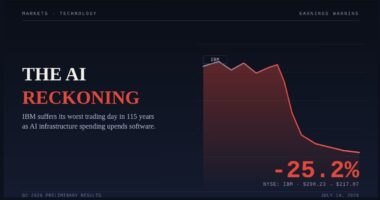
Palantir reported first-quarter revenue of $1.633 billion, an 85% year-on-year jump, well ahead of analyst forecasts. US commercial revenue surged 133% and the company guided second-quarter revenue above $1.79 billion, versus a Wall Street consensus of $1.68 billion. Goldman Sachs separately noted that the five largest global hyperscalers are now expected to collectively spend $751 billion in capex in 2026, an 83% jump from 2025.
This keeps the AI infrastructure spending narrative firmly alive — a positive signal for Indian IT companies with large AI services pipelines.
Amazon announced it will open its logistics network to third-party companies through a new service called “Amazon Supply Chain Services,” directly threatening established logistics operators. Deutsche Post fell 7.1% in response, one of the steepest single-day declines for the stock in recent memory.
This development is worth watching for India’s logistics and e-commerce sector, where Amazon is a dominant player. A global expansion of Amazon’s third-party logistics service could eventually reshape supply chain dynamics in Indian markets as well.
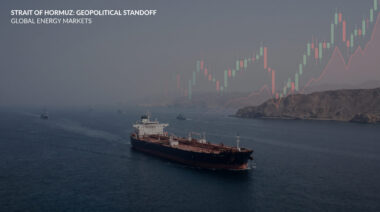
U.S. President Donald Trump announced an initiative named “Project Freedom,” aimed at enabling civilian vessels from non-aligned nations to safely exit the Strait of Hormuz and resume normal operations. For India, this is directly relevant — any restoration of shipping through the Strait eases crude import costs, reduces pressure on the Rupee, and takes the edge off domestic inflation.
Crude oil prices remained well above $100 a barrel as the U.S. and Iran continued simultaneously pursuing a truce and engaging in fresh hostilities over the Strait of Hormuz.
Brent crude was at $113.85 a barrel while U.S. crude stood at $105.03, having risen sharply in the previous session on renewed supply disruption fears.
Sustained oil above $100 directly worsens India’s trade deficit, weakens the Rupee, and keeps retail fuel and food prices under pressure.
The BOJ cut its economic growth forecast for fiscal 2026 to 0.5% from 1%, while raising its core inflation outlook to 2.8%, flagging that surging crude oil prices were expected to compress corporate profits and erode household incomes.
An analyst from Oxford Economics noted that Japan faces a “very light stagflation-like situation” this year, with real disposable incomes already in negative territory.
A stagflating Japan — Asia’s third-largest economy — adds to broader regional growth concerns and can weigh on risk sentiment across Asian markets, including India.
Samsung Electronics announced its latest HBM4 memory chip, aimed at strengthening its position in the AI accelerator market where supply remains constrained amid surging global demand.
This keeps the AI infrastructure buildout narrative alive across Asian tech. For Indian IT services firms with significant AI-related workloads, stronger semiconductor supply is a medium-term positive — it supports client spending pipelines in the U.S. and Asia.
Morgan Stanley upgraded its 2026 Hong Kong residential price growth forecast to 12%, projecting further gains of 5% in 2027, pointing to falling inventories, stronger average selling prices, and capital inflows from mainland China and the Middle East as key tailwinds.
The bank also revised up Central office rental growth to 5% for the year. A recovering Hong Kong property market signals improving sentiment toward Chinese and broader Asian assets — which can positively influence foreign institutional investor appetite toward emerging markets, including India.
Related Tags


 IIFL Customer Care Number
(Gold/NCD/NBFC/Insurance/NPS)
1860-267-3000 / 7039-050-000
 IIFL Capital Services Support WhatsApp Number
+91 9892691696
Download The App Now


Follow us on


2026, IIFL Capital Services Ltd. All Rights Reserved

IIFL Capital Services Limited - Stock Broker SEBI Regn. No: INZ000164132 (Member ID - NSE: 10975 BSE: 179 MCX: 55995 NCDEX: 01249), DP SEBI Reg. No. IN-DP-185-2016, IA SEBI Regn. No: INA000000623, Merchant Banker SEBI Regn. No. INM000010940, RA SEBI Regn. No: INH000000248, BSE Enlistment Number (RA): 5016, AMFI-Registered Mutual Fund Distributor & SIF Distributor
ARN NO : 47791 (Date of initial registration – 17/02/2007; Current validity of ARN – 08/02/2027), PFRDA Reg. No. PoP 20092018, IRDAI Corporate Agent (Composite) : CA1099

This Certificate Demonstrates That IIFL As An Organization Has Defined And Put In Place Best-Practice Information Security Processes.