Indian equity markets witnessed a sharp sell-off on Wednesday, July 8, as rising tensions between the United States and Iran increased concerns over global economic stability, crude oil prices and inflation.
The benchmark Sensex and Nifty 50 declined more than 2% each, marking the second consecutive session of losses after a four-session winning streak. The escalation in geopolitical risks prompted investors to reduce exposure to equities and move towards safer assets.
The market decline was driven not only by domestic factors but also by growing concerns that a prolonged conflict in the Middle East could disrupt energy supplies and increase costs for oil-importing countries like India.
The Nifty 50 dropped more than 500 points to close at 23,882, while the Sensex ended at 76,503.60 after a sharp intraday decline.
Heavyweight stocks led the market fall, with banking and energy companies among the biggest contributors.
HDFC Bank emerged as the largest drag on the Nifty 50.
Reliance Industries was the second-largest contributor to the index decline.
The selling pressure reflected broader investor concerns over global uncertainty and possible economic consequences of escalating geopolitical tensions.
One of the biggest concerns for India is the impact of higher crude oil prices.
India imports a significant portion of its crude oil requirements, making the economy sensitive to global oil price movements. Any disruption in oil supplies from the Middle East can lead to:
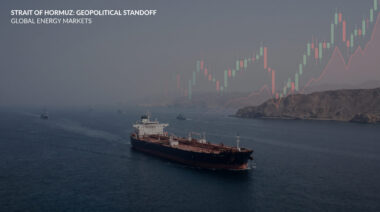
The renewed conflict between the US and Iran pushed oil prices higher as investors worried about possible disruptions in the Strait of Hormuz, a crucial route for global energy shipments.
Higher crude prices can negatively affect India’s current account balance and increase pressure on the rupee.
The Strait of Hormuz is one of the world’s most important oil shipping routes.
Escalating tensions between Washington and Tehran raised fears that disruptions in the region could affect global crude supplies.
Investors typically react negatively to such risks because uncertainty over energy availability can impact:
The possibility of prolonged instability in the region increased risk aversion across global markets.
Geopolitical uncertainty often leads foreign institutional investors (FIIs) to reduce exposure to emerging markets.
India, being one of the world’s largest emerging economies, can experience selling pressure when global investors move towards safer investments such as:
The rise in global risk aversion contributed to the decline in Indian equities.
Higher oil prices can complicate central banks’ efforts to manage inflation.
For India, an increase in crude prices could impact inflation through:
If inflation remains elevated, expectations of interest rate cuts may weaken, which can affect equity valuations.
The Indian market decline was also part of a broader global risk-off movement.
Investors became cautious after US President Donald Trump said the ceasefire agreement with Iran was effectively over following fresh military strikes.
The United States carried out attacks on Iranian targets after alleged attacks on commercial vessels in the Strait of Hormuz. Iran responded with warnings of retaliation and strikes targeting US military facilities in the Gulf region.
The possibility of a wider conflict increased uncertainty across financial markets.
Higher crude prices can increase input costs for fuel companies if price increases are not passed on immediately to consumers.
Airlines are highly sensitive to fuel prices. Rising crude prices can increase aviation turbine fuel costs and pressure profitability.
Companies dependent on imported raw materials may face higher expenses due to rising energy and input costs.
Upstream energy companies may benefit from higher crude prices.
A weaker rupee caused by higher oil prices may support exporters by increasing the rupee value of overseas earnings.
Markets will closely track:
A further escalation could keep markets under pressure, while signs of diplomatic progress may help restore investor confidence.
The sharp fall in Indian stock markets was largely driven by rising geopolitical uncertainty after tensions between the US and Iran escalated. Concerns over crude oil supplies, inflation risks and global economic stability triggered selling pressure across equities.
While domestic market fundamentals remain important, global events such as Middle East conflicts can significantly influence investor sentiment in the short term. The direction of crude oil prices and diplomatic developments between the US and Iran will remain key factors determining the next market move.
Related Tags


 IIFL Customer Care Number
(Gold/NCD/NBFC/Insurance/NPS)
1860-267-3000 / 7039-050-000
 IIFL Capital Services Support WhatsApp Number
+91 9892691696
Download The App Now


Follow us on


2026, IIFL Capital Services Ltd. All Rights Reserved

IIFL Capital Services Limited - Stock Broker SEBI Regn. No: INZ000164132 (Member ID - NSE: 10975 BSE: 179 MCX: 55995 NCDEX: 01249), DP SEBI Reg. No. IN-DP-185-2016, IA SEBI Regn. No: INA000000623, Merchant Banker SEBI Regn. No. INM000010940, RA SEBI Regn. No: INH000000248, BSE Enlistment Number (RA): 5016, AMFI-Registered Mutual Fund Distributor & SIF Distributor
ARN NO : 47791 (Date of initial registration – 17/02/2007; Current validity of ARN – 08/02/2027), PFRDA Reg. No. PoP 20092018, IRDAI Corporate Agent (Composite) : CA1099

This Certificate Demonstrates That IIFL As An Organization Has Defined And Put In Place Best-Practice Information Security Processes.