8 May 2026 , 06:39 PM
The flat close masked a meaningful intraday recovery — the index opened well below Thursday’s finish before steadily climbing back through the afternoon. Friday’s session also sealed China’s fifth consecutive week of gains, a run built on sustained buying in AI-linked and semiconductor stocks.
The index shed 232 points as the overnight US-Iran exchange of fire in the Strait of Hormuz revived ceasefire fears. Technology heavyweights bore the brunt of the selling, unwinding a portion of the week’s earlier gains.
Profit-taking after Thursday’s record close kept the index in the red. Toyota Motor dragged further after reporting a 49% collapse in quarterly operating profit, well below analyst expectations.
The KOSPI held near its record highs despite regional weakness, with steady inflows into semiconductor stocks providing a reliable floor through the session.
Renewed Hormuz hostilities trimmed India’s weekly gains. Private banks, PSU lenders, and auto stocks led the decline, while IT and pharma were the only sectors to finish in positive territory.
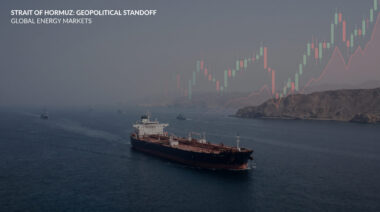
American and Iranian forces clashed in the Strait of Hormuz overnight, with each side accusing the other of firing first.
US Central Command confirmed that three Navy destroyers transiting the waterway came under fire and that its forces responded in self-defence.
President Trump sought to play down the confrontation, characterising it as an isolated incident and insisting that the broader ceasefire framework remained intact.
Impact on India: This remains the single most consequential risk for India’s near-term economic outlook. A fresh escalation would close off any path to lower crude prices, put renewed strain on the current account deficit, and push the Rupee under further pressure heading into the new week. India imports roughly 85% of its crude oil, with Gulf suppliers accounting for the bulk of that supply.
Oil prices reversed part of the week’s decline after the overnight naval exchange reignited fears over supply disruption, pushing Brent back above the $101 per barrel mark.
The International Energy Agency added to the cautious tone, estimating that the ongoing conflict is currently removing around 14 million barrels per day from global supply and warning that even a negotiated resolution would not translate into a quick return of volumes — damaged infrastructure and reluctance among shipping insurers to resume operations in the region would slow any recovery considerably.
Impact on India: Each $10 decline in Brent translates to roughly $15 billion in annual savings for India’s import bill.
The IEA’s warning is a clear signal that even a peace deal would not deliver immediate relief — the import cost burden and its downstream effects on inflation, the rupee, and the current account deficit are likely to persist well into the second half of the year.
Toyota reported a 49% year-on-year fall in fourth-quarter operating profit, badly missing analyst expectations as the combined weight of American tariffs and intensifying competition from Chinese automakers eroded its margins.
The full picture is stark: US tariffs removed approximately 1.45 trillion yen — around $9 billion — from Toyota’s full-year operating income, a figure vastly larger than the preliminary estimates the company had flagged at the start of the fiscal year. CEO Koji Sato acknowledged that the environment remained too unpredictable to offer reliable forward guidance.
Mitsubishi Motors compounded the gloom on the same day, disclosing that tariff-related costs had reduced its operating profit by over 32 billion yen, contributing to a net loss for the period. Its full-year operating profit guidance now stands at just 70 billion yen — roughly half of its prior forecast.
Impact on India: Two of Japan’s major automakers reporting severe earnings damage on the same day illustrates how broadly the tariff squeeze is biting through Asian manufacturing. India’s passenger vehicle market has deep ties to Japanese producers — most directly through Suzuki, parent of Maruti Suzuki. Sustained financial pressure in Japan risks slowing the pace of investment into Indian production operations.
Hong Kong’s economy expanded 5.9% in real terms year-on-year in the first quarter of 2026, marking its best quarterly reading in close to five years. The advance estimate showed growth accelerating sharply from the revised 4.0% recorded in the final quarter of 2025.
The expansion was broad-based, drawing on a surge in merchandise exports — particularly AI-related electronics — a pickup in fixed investment, and resilient consumer spending. Visitor arrivals crossed 14.3 million in the first three months, and the government now expects full-year tourist numbers to surpass its earlier projection of 53.8 million.
Impact on India: A Hong Kong economy firing on multiple cylinders is a positive signal for sentiment toward Chinese and broader Asian assets. Strong regional momentum generally supports foreign institutional investor appetite for emerging market allocations, which in turn benefits Indian equities and the broader investment climate.
China’s Ministry of Transport reported that the just-concluded five-day May Day holiday generated approximately 1.52 billion inter-regional passenger trips — a record high, and an increase of around 3.5% from a year earlier.
Cross-border travel also picked up meaningfully, with nearly 11.3 million entry and exit journeys logged over the holiday window. Separately, government trade-in incentive programmes had by May 4th reached over 86 million beneficiaries, generating cumulative sales of 629 billion yuan — pointing to a consumer recovery that is broadening well beyond travel and leisure.
Impact on India: A Chinese consumer regaining momentum is broadly constructive for the Asian growth story. Stronger domestic demand on the mainland supports global commodity flows and improves the risk appetite that typically drives foreign institutional capital into emerging markets, including India.
Related Tags


 IIFL Customer Care Number
(Gold/NCD/NBFC/Insurance/NPS)
1860-267-3000 / 7039-050-000
 IIFL Capital Services Support WhatsApp Number
+91 9892691696
Download The App Now


Follow us on


2026, IIFL Capital Services Ltd. All Rights Reserved

IIFL Capital Services Limited - Stock Broker SEBI Regn. No: INZ000164132 (Member ID - NSE: 10975 BSE: 179 MCX: 55995 NCDEX: 01249), DP SEBI Reg. No. IN-DP-185-2016, IA SEBI Regn. No: INA000000623, Merchant Banker SEBI Regn. No. INM000010940, RA SEBI Regn. No: INH000000248, BSE Enlistment Number (RA): 5016, AMFI-Registered Mutual Fund Distributor & SIF Distributor
ARN NO : 47791 (Date of initial registration – 17/02/2007; Current validity of ARN – 08/02/2027), PFRDA Reg. No. PoP 20092018, IRDAI Corporate Agent (Composite) : CA1099

This Certificate Demonstrates That IIFL As An Organization Has Defined And Put In Place Best-Practice Information Security Processes.