29 Apr 2026 , 06:59 PM
The United Arab Emirates (consisting of Abu Dhabi, Dubai, Sharjah, Ajman, Umm Al Quwain, Ras Al Khaimah, and Fujairah) on Tuesday reported exiting the OPEC and broader OPEC+ framework effectively from May 1, 2026. The exit is one of the most consequential shifts in global oil governance in decades, significant enough to merit serious analytical attention. The exit of a major Gulf oil producer from coordinated output management forces a re-examination of how global oil markets are structured and how fragile that structure may have become.
For over half a century, OPEC and later OPEC+ have functioned as the central coordinating mechanism for global crude oil supply. By managing production quotas among member states, the bloc has historically sought to stabilize prices and protect producer revenues. However, this system has increasingly shown internal friction, driven by divergent national priorities.
In this context, the UAE’s exit would not merely be a procedural departure, but a signal in structural weakening of collective supply discipline. The core principle of coordinated restraint, already under pressure from internal disagreements, would face further erosion. The implication is clear: global oil pricing could become more exposed to pure market dynamics rather than managed equilibrium.
At the heart of this development lies the UAE’s long-term energy strategy. With current production capacity estimated at roughly 3.4 million barrels per day and ambitions reportedly targeting up to 5 million barrels per day, the UAE has been steadily positioning itself as a major expansionary force within global oil supply.
A departure from OPEC constraints would theoretically allow the UAE to pursue output growth more aggressively, potentially selling crude without quota limitations and optimizing revenue through market-driven pricing. Such a shift would not only increase the UAE’s market share but also redefine its role to a competitive energy exporter operating independently out of cartel discipline.
If a major producer with spare capacity operates outside OPEC constraints, the immediate consequence is not simply higher supply, but reduced predictability. OPEC’s traditional value has not only been price management but also the provision of a supply “buffer” during shocks.
A UAE exit would dilute this buffer. While additional production could eventually exert downward pressure on prices, the transition period would likely be characterized by volatility rather than stability. Market participants would have to reassess assumptions about coordinated supply responses during crises.
For India, which imports nearly 85% of its crude oil requirements, the implications are especially significant. India’s diversified sourcing strategy spanning more than 40 suppliers provides flexibility, but it does not eliminate exposure to global price cycles.
In a scenario where UAE output increases outside quota limits, India could benefit from:
However, these benefits would be conditional rather than guaranteed. Oil markets rarely respond in a linear fashion. Short-term disruptions or geopolitical risk premiums could offset supply-driven price relief.
Even if increased production eventually stabilizes prices, the short-term market reaction would likely be turbulent. Oil prices are highly sensitive to geopolitical signals, and any breakdown in coordinated supply management tends to amplify speculative activity.
Under stress scenarios, benchmark crude prices have historically experienced sharp spikes, and renewed uncertainty could reintroduce similar volatility patterns. The key distinction is that markets would be reacting not only to supply-demand fundamentals but also to institutional uncertainty – such as who will coordinate the supply further?, how other oil producers will react in crisis?, whether the institutional rules will still be applicable?
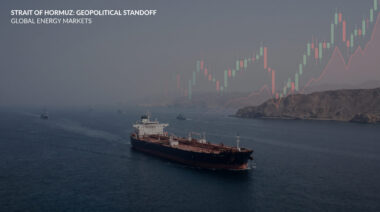
No discussion of global oil stability is complete without acknowledging the strategic importance of the Strait of Hormuz, through which roughly one-fifth of global oil supply passes. Any escalation of regional tensions in this corridor would magnify price volatility regardless of production levels elsewhere.
Even in a world of higher output, shipping premiums, insurance costs, and freight volatility would remain critical determinants of final consumer pricing.
Beyond the UAE-specific narrative, the broader trend is unmistakable: OPEC+ influence has been gradually eroding. Rising US production, internal disagreements among members, and prior exits such as Qatar (2019), Angola (2024), and Ecuador (2020) reflect a slow fragmentation of unified supply control.
However, the larger risk may not be the UAE’s exit alone, but what it enables.
A departure by a major, capacity-rich producer could trigger a contagion effect within the bloc. Countries like Kazakhstan, which has consistently exceeded its production quota; and Nigeria, which is increasingly focused on domestic refining and less reliant on export discipline; may interpret the UAE’s move as a signal that quota compliance is no longer binding.
If multiple members begin to loosen adherence or exit altogether, the consequences would extend beyond supply increases. OPEC’s credibility as a price-setting institution would erode further, weakening its ability to influence market expectations.
The precedent for exit already exists. What changes with a UAE departure is scale and signal. It risks normalizing the idea that membership in OPEC is optional rather than strategic.
In this case, a UAE exit would accelerate an existing trajectory rather than initiate a new one. The data already reflects this shift: OPEC+’s share of global oil output has slipped to around 44% in recent months and is expected to decline further. With the UAE, the group’s fourth largest producer stepping away, OPEC+’s share in global oil output could fall more sharply in the near term.
This does not imply an immediate collapse of the cartel model. Rather, it underscores a more subtle transformation: OPEC+ is increasingly operating in a global energy landscape where its authority is contested, externally by rising non-OPEC producers, and internally by diverging national priorities.
Saudi Arabia remains the central stabilizing force within OPEC, but its ability to enforce discipline diminishes as member alignment weakens. A more independent UAE would introduce a competitive dynamic within the Gulf itself, not only in production strategy but also in investment attraction and geopolitical influence.
This subtle rivalry could reshape energy diplomacy in the region, replacing coordinated leadership with parallel strategies.
The UAE’s evolving foreign policy posture marked by deeper engagement with Western economies and diversified strategic partnerships fits into a larger pattern of Gulf states recalibrating their global positioning. Energy policy, in this context, becomes an extension of broader economic sovereignty rather than purely cartel-driven coordination.
With the UAE formally exiting from OPEC+, the era of tightly coordinated global oil supply management is under strain. Increasing production ambitions, shifting geopolitical alliances, and fragmented producer interests are all contributing to a more decentralized energy landscape.
For consumers, particularly import-dependent economies like India, this evolution carries both promise and risk. Lower prices are possible but so is heightened volatility. The defining feature of the next phase of global oil markets may not be abundance or scarcity, but unpredictability.
Related Tags


 IIFL Customer Care Number
(Gold/NCD/NBFC/Insurance/NPS)
1860-267-3000 / 7039-050-000
 IIFL Capital Services Support WhatsApp Number
+91 9892691696
Download The App Now


Follow us on


2026, IIFL Capital Services Ltd. All Rights Reserved

IIFL Capital Services Limited - Stock Broker SEBI Regn. No: INZ000164132 (Member ID - NSE: 10975 BSE: 179 MCX: 55995 NCDEX: 01249), DP SEBI Reg. No. IN-DP-185-2016, IA SEBI Regn. No: INA000000623, Merchant Banker SEBI Regn. No. INM000010940, RA SEBI Regn. No: INH000000248, BSE Enlistment Number (RA): 5016, AMFI-Registered Mutual Fund Distributor & SIF Distributor
ARN NO : 47791 (Date of initial registration – 17/02/2007; Current validity of ARN – 08/02/2027), PFRDA Reg. No. PoP 20092018, IRDAI Corporate Agent (Composite) : CA1099

This Certificate Demonstrates That IIFL As An Organization Has Defined And Put In Place Best-Practice Information Security Processes.