The Indian stock market is witnessing a sharp sell-off today, with the Nifty 50 falling below the 22,900 mark and the Sensex declining by more than 900 points in morning trade.
At around 11:06 AM, the Nifty was trading at 22,825.95, down 314.85 points or 1.36%, while the BSE benchmark was at 72,879.17, down 1,016.57 points or 1.38%.
The sharp decline comes amid growing concerns over Iran–US tensions, rising crude oil prices, higher US bond yields, a weakening Indian rupee and continued foreign investor selling.
The broader market is also experiencing significant risk aversion, with most major sectors trading in negative territory.
There are several factors behind today’s decline in Indian equities. The key trigger is renewed geopolitical uncertainty involving Iran and the US, which has pushed concerns about global oil supplies to the forefront.
Here’s a closer look at the major factors weighing on the Indian stock market.
Escalating tensions between Iran and the US have increased uncertainty in global financial markets.
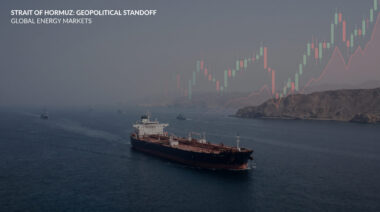
One of the biggest concerns for investors is the Strait of Hormuz, a critical route for global oil shipments. Any disruption to oil flows through the region could potentially tighten global crude supplies and push energy prices higher.
Markets are therefore closely monitoring developments around the proposed ceasefire and the situation surrounding the Strait of Hormuz.
For India, the issue is particularly important because the country is heavily dependent on imported crude oil.
Another major pressure point is the sharp rise in crude oil prices.
Brent crude has moved close to $107 per barrel, raising concerns about the impact of expensive energy on oil-importing economies such as India.
Higher crude prices can affect the Indian economy through several channels:
If crude remains elevated for an extended period, investors may become increasingly concerned about the impact on India’s inflation outlook and corporate earnings.
US Treasury yields are another important factor influencing global equity markets.
The US 10-year Treasury yield has crossed 5.2%, while the 30-year yield has moved above 5.5%, according to the market data cited in the article.
Higher US yields can make fixed-income assets relatively more attractive to global investors. At the same time, elevated yields can increase borrowing costs across global markets.
This creates additional pressure on risk assets, including emerging-market equities.
For India, the combination of higher US yields and a stronger US dollar can also contribute to capital outflows and currency pressure.
The Indian rupee has also come under pressure, slipping to around ₹95.89 against the US dollar.
Three factors are particularly important here:
Higher crude oil prices + stronger dollar + elevated US yields = increased pressure on the rupee.
A weaker rupee can make imported commodities, including crude oil, more expensive in domestic currency terms.
This can create an additional inflationary effect and potentially increase the cost burden for companies that depend on imported raw materials.
The currency movement is therefore an important variable for investors to watch alongside crude oil prices.
Foreign investor flows are adding to the pressure on Indian stocks.
According to the figures cited in the article, foreign portfolio investors (FPIs) sold around ₹3,694 crore of Indian equities on Friday.
Equity outflows for the month had reached approximately ₹25,682 crore, according to the same source.
Persistent foreign selling can weigh particularly heavily on large-cap stocks and major benchmark indices.
When global investors reduce exposure to emerging markets because of higher US yields, geopolitical uncertainty or currency concerns, Indian equities can face additional selling pressure.
The weakness in Indian equities is not occurring in isolation.
Asian markets have also declined amid concerns over geopolitical tensions and rising oil prices.
The South Korean Kospi fell more than 2%, while the Shanghai Composite declined more than 1.7%, according to the market figures cited.
This suggests that today’s Indian market decline is part of a broader global risk-off move rather than being driven exclusively by domestic factors.
When global investors become more cautious, emerging-market equities can experience increased volatility as investors reassess risk and portfolio allocations.
As of approximately 11:06 AM, the market snapshot is:
| Index/Indicator | Current level / move |
|---|---|
| Nifty 50 | 22,825.95 |
| Nifty 50 change | -314.85 points (-1.36%) |
| BSE benchmark | 72,879.17 |
| BSE change | -1,016.57 points (-1.38%) |
| Immediate Nifty level mentioned | 23,000 |
| Lower technical level | 22,800 |
| Recovery zone mentioned | 23,300–23,450 |
The broader market is also under pressure. Around 2,259 stocks were declining compared with 759 advancing, indicating weak market breadth.
The India VIX was up nearly 13%, reflecting a significant increase in market volatility.
All major sectors were trading in the red at the time of the market snapshot.
The sharp decline in benchmark indices has also translated into a substantial erosion in investor wealth.
Approximately ₹6 lakh crore was wiped out from the BSE-listed companies’ market capitalisation, according to the figures cited.
The combination of widespread declines, rising volatility and heavy selling indicates broad-based risk aversion across the market.
The current market movement can be understood through a simple chain:
Iran–US tensions → Strait of Hormuz concerns → crude oil prices rise → inflation and import-cost concerns → US yields and dollar strengthen → rupee weakens + foreign selling → Indian equities decline
This interconnected chain is why investors are watching global developments particularly closely.
A change in any one of these variables could influence market sentiment, although the direction and magnitude of future market moves cannot be guaranteed.
Three variables highlighted by the market analysis are particularly important:
The trajectory of crude oil prices will remain crucial for India.
A sustained move higher could increase concerns about inflation, the trade deficit, the rupee and corporate margins.
The US 10-year yield is an important indicator for global capital flows and risk appetite.
Further increases could maintain pressure on emerging-market assets, while a decline could ease some of the pressure.
Foreign investor buying and selling will also remain an important market indicator.
Continued heavy outflows could add pressure to Indian equities, while a reduction in selling could potentially improve market sentiment.
The technical analysis cited in the article identifies 23,000 as an immediate support level, followed by 22,800.
On the upside, the 23,300–23,450 range has been identified as a potential recovery zone.
These levels are technical reference points from the cited analysis and should not be interpreted as guarantees of future market direction.
With the Nifty already trading around 22,825.95 at 11:06 AM, the 22,800 level becomes particularly relevant in the context of the technical framework cited.
Today’s sell-off highlights how Indian equities can be influenced by global macroeconomic and geopolitical developments.
Even when domestic economic fundamentals remain an important consideration, factors such as:
can have a significant short-term impact on Indian markets.
This is particularly relevant for an emerging market such as India, where oil imports, foreign capital flows and currency movements are closely connected to global financial conditions.
The Indian stock market is falling today because several global risk factors are hitting the market simultaneously.
The escalation in Iran–US tensions has increased concerns about the Strait of Hormuz and global oil supplies. This has contributed to higher crude prices, while elevated US Treasury yields and a stronger dollar are adding pressure to emerging-market assets.
At the same time, the rupee has weakened, foreign investors continue to sell Indian equities, and Asian markets are also experiencing significant declines.
For investors tracking the market, Brent crude, the US 10-year Treasury yield and FPI flows are among the key indicators to watch.
The immediate technical levels cited in the analysis are 23,000 and 22,800 on the downside, with 23,300–23,450 identified as a potential recovery zone. However, these are technical reference levels rather than predictions of where the market will move next.
Disclaimer – The stock/s and indices mentioned in this article are discussed solely for informational and educational purposes. It should not be construed as investment advice or a recommendation to buy or sell any securities. The views and investment recommendations mentioned in the article are reported by investment experts, analysts, broking houses, rating agencies and other market professionals in their own capability and do not represent the views of Indiainfoline/IIFL Capital website or its management. Investors should conduct their own research or consult a financial advisor before making any investment decisions. Investments in securities markets are subject to market risks. Read all the related documents carefully before investing
Related Tags


 IIFL Customer Care Number
(Gold/NCD/NBFC/Insurance/NPS)
1860-267-3000 / 7039-050-000
 IIFL Capital Services Support WhatsApp Number
+91 9892691696
Download The App Now


Follow us on


2026, IIFL Capital Services Ltd. All Rights Reserved

IIFL Capital Services Limited - Stock Broker SEBI Regn. No: INZ000164132 (Member ID - NSE: 10975 BSE: 179 MCX: 55995 NCDEX: 01249), DP SEBI Reg. No. IN-DP-185-2016, IA SEBI Regn. No: INA000000623, Merchant Banker SEBI Regn. No. INM000010940, RA SEBI Regn. No: INH000000248, BSE Enlistment Number (RA): 5016, AMFI-Registered Mutual Fund Distributor & SIF Distributor
ARN NO : 47791 (Date of initial registration – 17/02/2007; Current validity of ARN – 08/02/2027), PFRDA Reg. No. PoP 20092018, IRDAI Corporate Agent (Composite) : CA1099

This Certificate Demonstrates That IIFL As An Organization Has Defined And Put In Place Best-Practice Information Security Processes.