

Capital expenditure covers long-term investments in assets, while revenue expenditure includes daily operational costs. Learn more details at India Infoline.

Dividend Payout Ratio is percentage of a company’s net income distributed to shareholders as dividends. Learn how it is calculated with an example, importance of dividend payout ratio.

Learn about dividends, the different types, and their advantages and disadvantages. Understand how they affect share prices with our insight's at India Infoline.

Dividend Per Share (DPS) is the total dividend amount allocated to each outstanding share of a company. Learn how to calculate dividend per share effectively.

A dividend is a portion of a company’s profits distributed to its shareholders, typically in the form of cash, shares, or equivalents. Learn more at India Infoline.

Voting shares, as the name suggests, are shares that entitle the holder with the right to vote on matters governing corporate policy. Mostly, common shares issued by a company are referred to as voting shares
The risk-free rate of return is a theoretical number within the capital markets that pertains to an investment that provides guaranteed returns with negligible or zero risk.
The stock market is like an enormous ocean involving investors, companies, stock exchanges, and others under one umbrella. Billions of transactions happen in the stock market daily.
Dual-class stocks are a stock offering structure in a company when they issue two classes of shares. For example, a dual-class stock structure might consist of class A and class B shares.
For investors and financial professionals, it is customary to be versed in and interpret the various types of SEC filing, to make well-informed investment decisions.
Investors associated with the stock market are accustomed to stock market fluctuations.
The past few years have seen discussions around the wax and wane of a share buyback or share repurchase, questioning whether it’s a healthy move for both companies and investors.
The stock to a company's finance is like a cell is to the human body–it is the crux of finance of a company. Every organization needs funds to function.
Education costs have shot up through the roof in the last few years. Today a 4 year engineering course in a reputed institution costs you nothing less than Rs.15 lakhs.
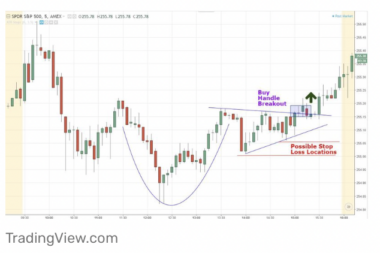
The cup and handle chart pattern on a security’s price chart is a technical indicator similar to a cup with a handle, where the bowl is U-shaped and the handle moves slightly downwards.


Click icons above to download App for Android or iOS


 IIFL Customer Care Number
(Gold/NCD/NBFC/Insurance/NPS)
1860-267-3000 / 7039-050-000
 IIFL Capital Services Support WhatsApp Number
+91 9892691696
Download The App Now


Follow us on


2026, IIFL Capital Services Ltd. All Rights Reserved

IIFL Capital Services Limited - Stock Broker SEBI Regn. No: INZ000164132 (Member ID - NSE: 10975 BSE: 179 MCX: 55995 NCDEX: 01249), DP SEBI Reg. No. IN-DP-185-2016, IA SEBI Regn. No: INA000000623, Merchant Banker SEBI Regn. No. INM000010940, RA SEBI Regn. No: INH000000248, BSE Enlistment Number (RA): 5016, AMFI-Registered Mutual Fund Distributor & SIF Distributor
ARN NO : 47791 (Date of initial registration – 17/02/2007; Current validity of ARN – 08/02/2027), PFRDA Reg. No. PoP 20092018, IRDAI Corporate Agent (Composite) : CA1099

This Certificate Demonstrates That IIFL As An Organization Has Defined And Put In Place Best-Practice Information Security Processes.